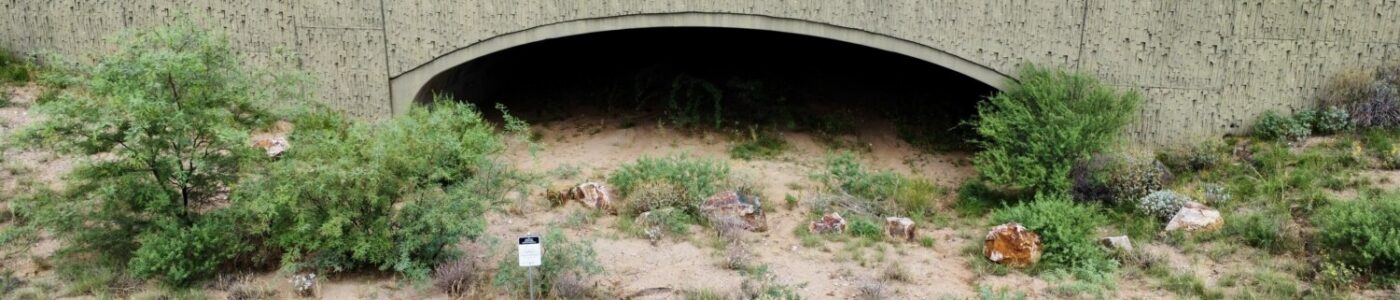
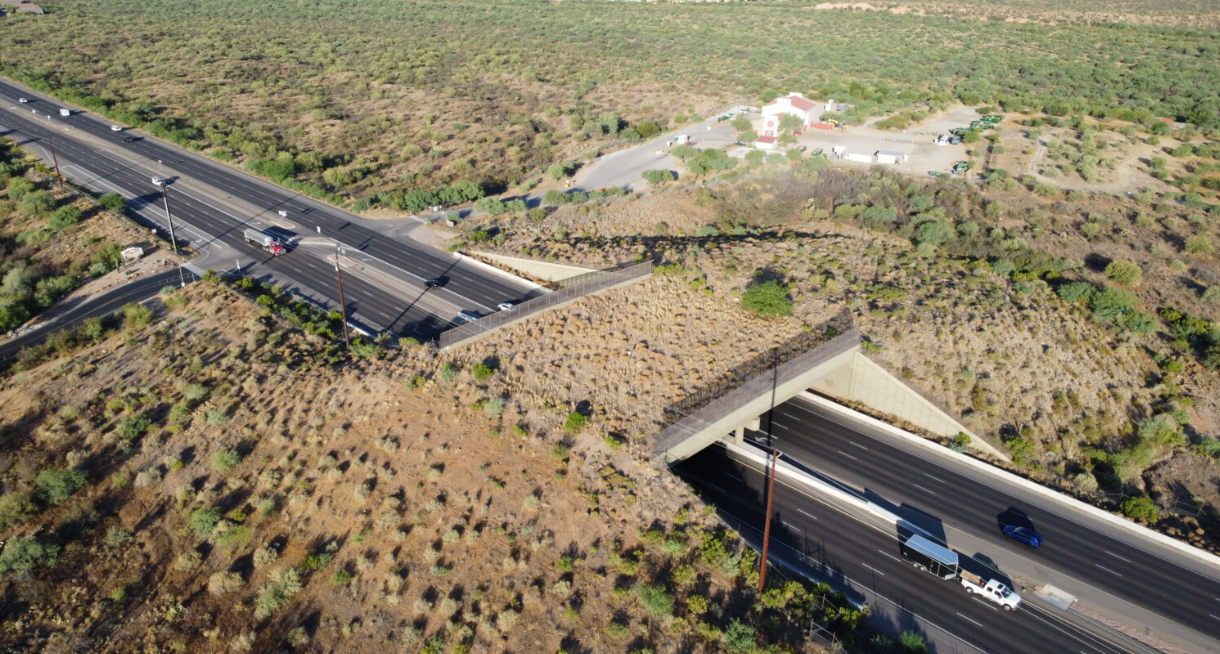
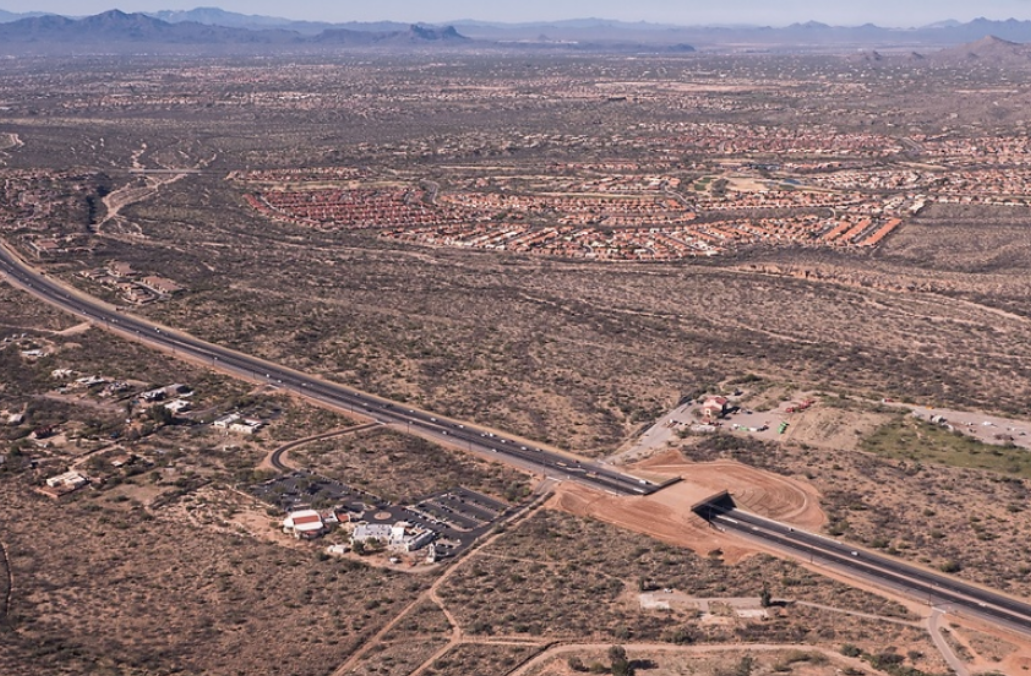
The Ann Day Memorial Wildlife Bridge on Oracle Road is the first of its kind in the Sonoran Desert. The sister underpass near the Big Wash trail creates more opportunities for animals to safely cross the road.
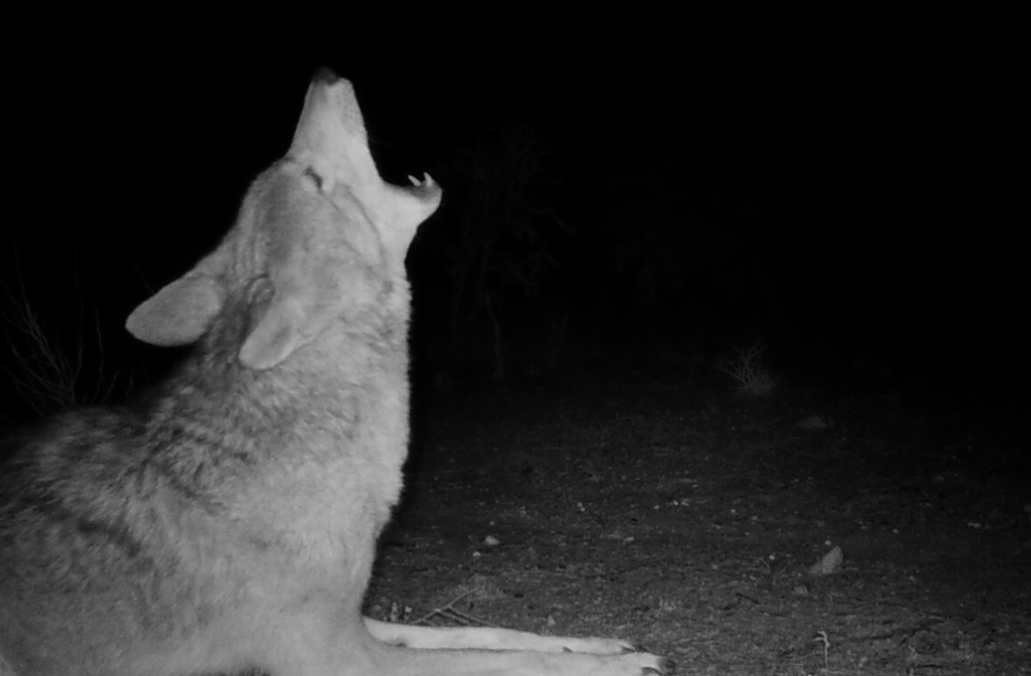
These wildlife crossings connect the Tortolita Mountains and the Catalina Mountains for animals like mule deer, bighorn sheep, javelina, badgers, bobcats, coyotes, and many more. In fact, the wildlife crossings are crossed over 3,000 to 4,000 times per year by local wildlife, based on data from our wildlife cameras.
The Ann Day Memorial Wildlife Bridge was constructed after 20 years of planning, collaboration and community effort. This bridge was publicly funded thanks to the 2006 RTA Plan vote, initiating a half-cent sales tax that included $45 million in funding for wildlife connectivity. After construction finished in 2016, these crossings connected the landscape and created a safe passage across Oracle Road. In 2023, the last remaining gaps in the wildlife funnel fence to keep animals off the roadway were resolved. And in 2023, the Coalition launched our restoration project on the wildlife crossing bridge and underpass, “Habitat Restoration Days,” creating and improving the habitat to encourage even more animals to use these important structures with funding from the Santa Cruz Valley National Heritage Area.
Big Wash Wildlife Corridor Interpretative Signage
In 2025, we installed new interpretative signage about the Oracle Road wildlife crossings structures at the Big Wash Trailhead in Oro Valley. This sign was made by the Coalition for Sonoran Desert Protection with funding from the Santa Cruz Valley National Heritage Area. Special thanks goes to Jonni Zeman, for the artwork and design, and Lilly Elena Esperanza Ramirez, for the descriptions, and to Carolyn Campbell and the many dedicated volunteers and supporters who made the Oracle Road Wildlife Crossings a reality. This sign is dedicated in special memory to Bob Cratty, Elizabeth Deupree and Josh Skattum.
Esta señal fue hecha por la Coalition for Sonoran Desert Protection con fondos del área de Santa Cruz Valley National Heritage Area. Un agra decimiento especial a Jonni Zeman, para el arte y diseño, & Lilly Elena Esperanza Ramíre, para las descripciones y a Carolyn Campbell y a los muchos voluntarios dedicados y partidarios que hicieron realidad los cruces de vida silvestre de Oracle Road. Este cartel está dedicado en especial memoria a Bob Cratty, Elizabeth Deupree y Josh Skattum.

¿Qué es un cruce de vida silvestre?
Bienvenido a los cruces de vida silvestre, un enlace vital entre las cordilleras Catalina y Tortolita en Arizona. Estos cruces sirven como paso seguro para la vida silvestre del desierto y ayudan a evitar que se encuentren con vecindarios humanos y carreteras peligrosas. Un cruce de vida silvestre es una estructura, generalmente un puente o paso subterráneo, que permite a la vida silvestre cruzar con seguridad sobre o debajo de una carretera u otra barrera. Un cruce de vida silvestre es una estructura, generalmente un puente o paso subterráneo, que permite a la vida silvestre cruzar con seguridad sobre o debajo de una carretera o barrera. Con 150 pies de ancho, el Ann Day Memorial Wildlife Bridge y su paso subterráneo hermano ofrecen un escudo esencial contra las vistas, olores y sonidos de la carretera cercana. La esgrima de la vida silvestre a lo largo de Oracle Road guía a los animales hacia los cruces y los mantiene fuera de peligro. En el caso de que la vida silvestre se acerque a estas vallas, los saltos proporcionan rampas para un regreso seguro en una sola dirección sin dar acceso a la carretera. Estas medidas aseguran la preservación de hábitats conectados
promoviendo la próspera biodiversidad de la región.
¿Por qué son importantes estos cruces?
Los cruces de vida silvestre reducen las colisiones de vehículos de vida silvestre que conducen a accidentes y a la muerte de carreteras. Al mismo tiempo, ayudan a las poblaciones de vida silvestre a mantenerse fuertes y saludables al ser capaces de moverse entre espacios abiertos protegidos para encontrar parejas y nuevos campos de cultivo. Los cruces de vida silvestre son una solución de ganar-ganar para todos. Al proporcionar este vínculo vital, los animales tienen la libertad de vagar dentro del enlace de vida silvestre Tortolita-Santa Catalina Mountains, un área importante de movimiento de vida silvestre que abarca Tucson Mountain Park, Honey Bee Canyon Park, Arizona State Lands, Big Wash y Catalina State Park. Para ayudar con su efectividad, es importante que los visitantes se mantengan en los senderos y lejos de los cruces. La presencia humana puede disuadir a los animales de usar este pasaje seguro. Al permitir el acceso sin restricciones de la vida silvestre a recursos esenciales como los mates, los alimentos, el agua y el hábitat, mejoramos su capacidad para adaptarse y prosperar en entornos en constante cambio, salvaguardando la diversidad y la resiliencia de las generaciones futuras.
¿Qué animales usan el corredor de vida silvestre?
En promedio, se observan 2.000 cruces de animales cada mes en los cruces de vida silvestre de la Oracle Road Wildlife Crossings. Las cámaras de vida silvestre colocadas en todo el enlace muestran las diversas especies del Desierto de Sonora que llaman hogar a este lugar. Más comúnmente vistos son ciervos de mula, coyotes, jabalina, gatos, codorniz de Gambel, Antelope jackrabbits, conejos de cola de algodón,tortugas del desierto y corredores de carretera. También vemos a veces monstruos Gila, ciervos de cola blanca, zorrillos manchados, zorrillos hognosed, tejones, zorro gris, coati de nariz blanca, y muy raramente, oso negro, leones de montaña, y las ovejas cigarnio. Septiembre es cuando vemos un pico en el movimiento de ciervos de mulas. La mayoría de los animales del desierto son activados por la noche, y al amanecer y al atardecer.
¡Su apoyo a la protección de espacios abiertos y cruces de vida silvestre ayuda a que nuestra vida silvestre prospere!
What is a wildlife crossing?
Welcome to the Oracle Road Wildlife Crossings, a vital link between the Catalina and Tortolita mountain ranges in Arizona. These crossings serve as safe passage for desert wildlife and help keep them from encountering human neighborhoods and hazardous highways. A wildlife crossing is a structure, usually a bridge or underpass, that allows wildlife to safely cross over or under a roadway or other barrier. Spanning 150 feet wide, the Ann Day Memorial Wildlife Bridge and its sister underpass offer essential shielding from the sights, smells, and sounds of the nearby highway. Wildlife funnel fencing along Oracle Road guides animals towards the crossings and keeps them out of danger. In the event wildlife get around these fences, jump-outs provide ramps for a safe one-way return without giving access to the highway. These measures ensure the preservation of connected habitats promoting the thriving biodiversity of the region.
Why are these crossings important?
Wildlife crossings reduce wildlife-vehicle collisions that lead to crashes and roadkill. At the same time, they help wildlife populations stay strong and healthy by being able to move between protected open spaces to find mates and new home ranges. Wildlife crossings are a win-win solution for everyone. By providing this vital link, animals have the freedom to roam within the Tortolita-Santa Catalina Mountains Wildlife Linkage, an important area of wildlife movement that encompasses Tucson Mountain Park, Honey Bee Canyon Park, Arizona State Lands, Big Wash, and Catalina State Park. To assist with their effectiveness, it’s important for visitors to keep to the trails and away from the crossings — human presence can deter animals from using this safe passage. By allowing wildlife unrestricted access to essential resources such as mates, food, water, and habitat, we enhance their ability to adapt and thrive in ever-changing environments, safeguarding the diversity and resilience of future generations.
What animals use the wildlife corridor?
On average, 3,000 to 4,000 animal crossings are observed every year on the Oracle Road Wildlife Crossings. Wildlife cameras placed throughout the linkage showcase the diverse Sonoran Desert species that call this place home. Most commonly seen are mule deer, coyotes, javelina, bobcats, Gambel’s quail, Antelope jackrabbits, cottontail rabbits, desert tortoises, and roadrunners. In the area we also sometimes see Gila monsters, white-tail deer, spotted skunks, hog nosed skunks, badgers, gray fox, white-nose coati, and very rarely, black bear, mountain lions, and bighorn sheep. September is when we see a peak in mule deer movement. Most desert animals are active at night, and at dawn and dusk.
Your support for open space protection and wildlife crossings helps our wildlife thrive!
Explore more about the crossings below!


Support our work as we continue to pursue a connected and protected Sonoran Desert for generations to come!