Since August 2023, we’ve led our Habitat Restoration Days at the Oracle Road wildlife crossings to improve the habitat for wildlife and support biodiversity. In August 2024, we received a second grant from the Santa Cruz Valley National Heritage Area that provided funding to continue this successful project. Our renewed focus was to build on the foundational work we completed in 2023-2024. Thanks to the dedication of our partners and volunteers, we’ve battled buffelgrass, added native plants and seed mixes, built erosion control structures, surveyed the adjacent wildlife fencing for breaks and maintenance needs, picked up trash along Oracle Road and held educational workshops for our volunteers and local youth.

Take a look at what we’ve accomplished together over the past year!
To see our work summary from September 2023-August 2024 click here.
October 12th, 2024
Volunteers returned with us to the Ann Day Memorial Wildlife Bridge, excited to continue their stewardship. We split into teams, each with a mission for the day. One team surveyed for buffelgrass, collecting data that would help guide future invasive species management efforts. Meanwhile, the other team strategically placed seedballs at the wildlife bridge and built media luna rock structures, setting the stage for new growth and collection of rainwater that would benefit the surrounding habitat.
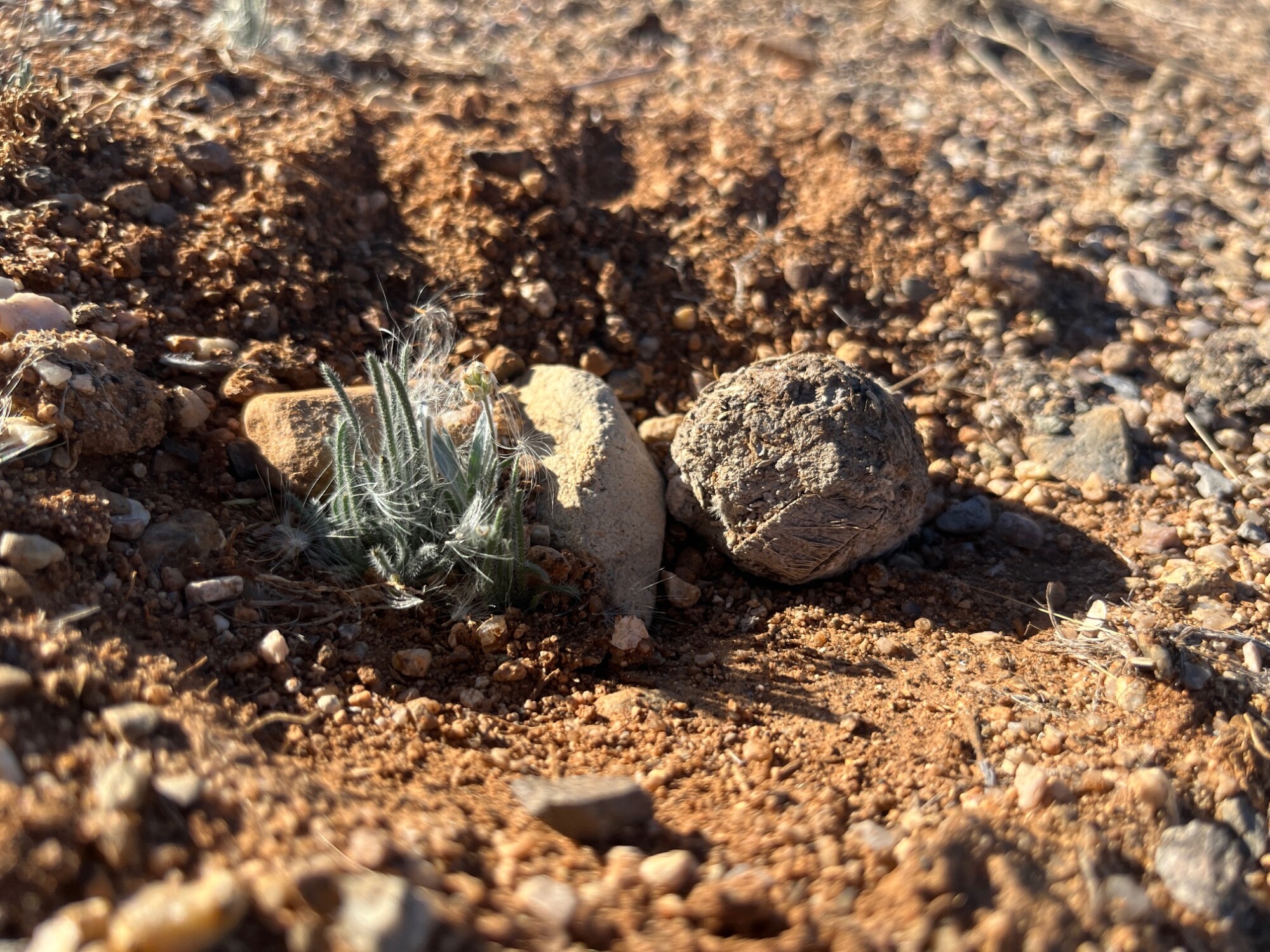
What are seedballs? Think of seedballs as a protective packet of soil and clay for seeds that will open up with rain! These seedballs contain a native seed mix that was specifically curated for this habitat, including wildflowers, shrubs, grasses and cacti.
December 14th, 2024
In December, we put our buffelgrass data to good use and removed invasive species on the map, collecting trash along the way. By the end of the day, we removed 27 bags of buffelgrass and trash!
See the live map of our buffelgrass data here
January 10th, 2025
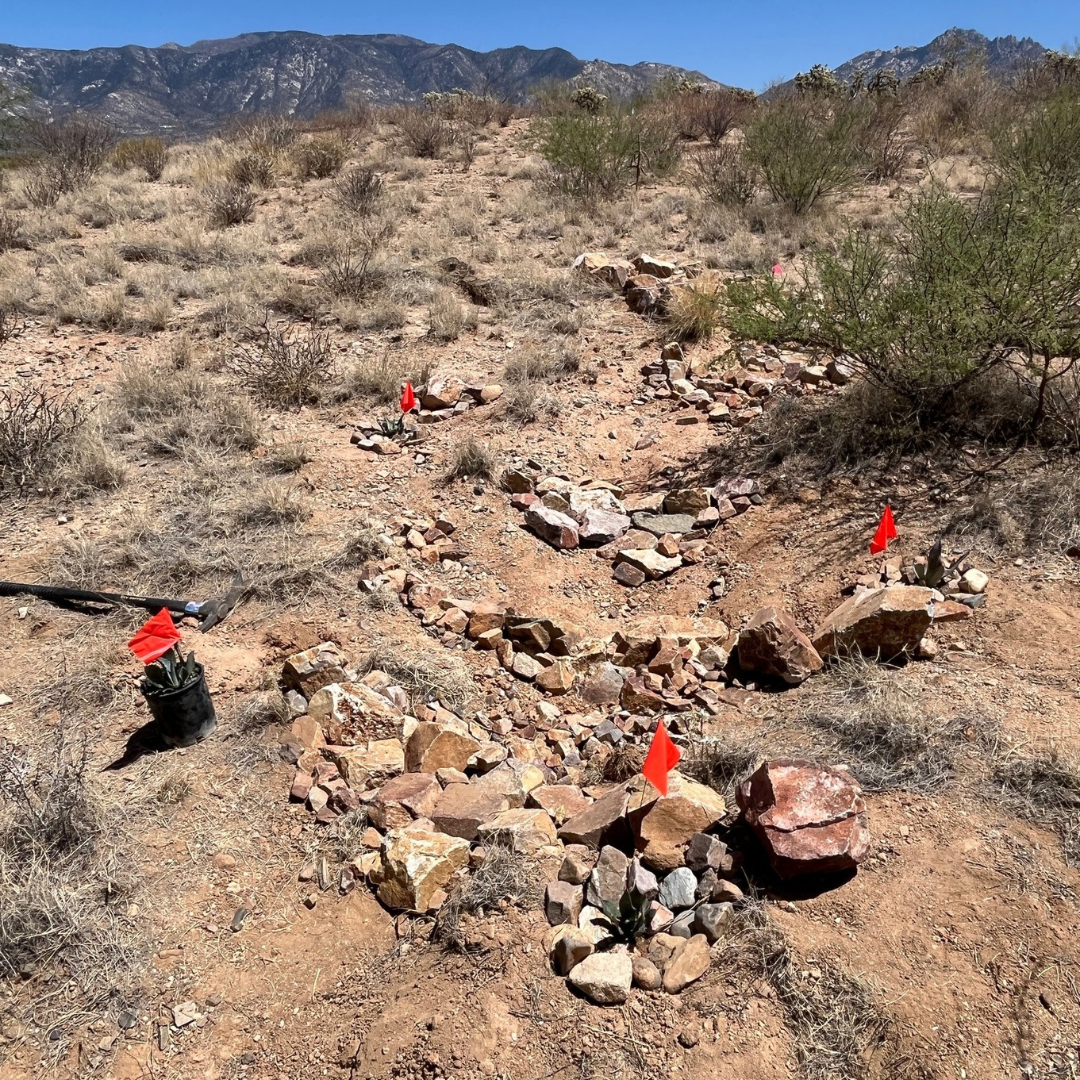
In January, we hosted out first-ever Erosion Control Workshop in partnership with Pima County Conservation Lands & Resources, Pima County Flood Control District, and Strategic Habitat Enhancements. Volunteers learned to identify erosion, understand water movement, and build rock structures to mitigate the damaging effects of erosion. To apply their knowledge, volunteers strategically placed flags at the wildlife underpass to mark ideal spots for future erosion control structures.
March 28th & April 25th 2025
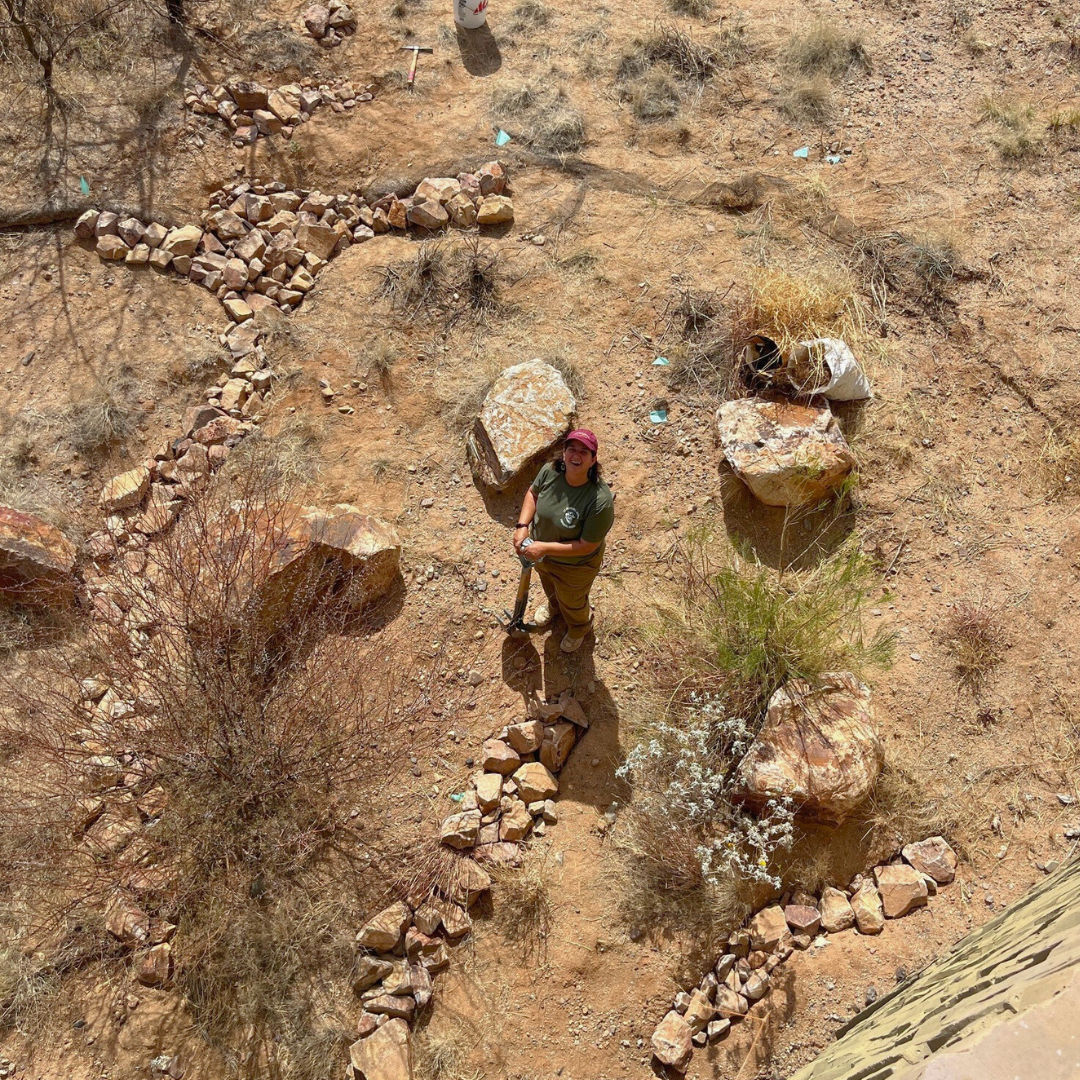
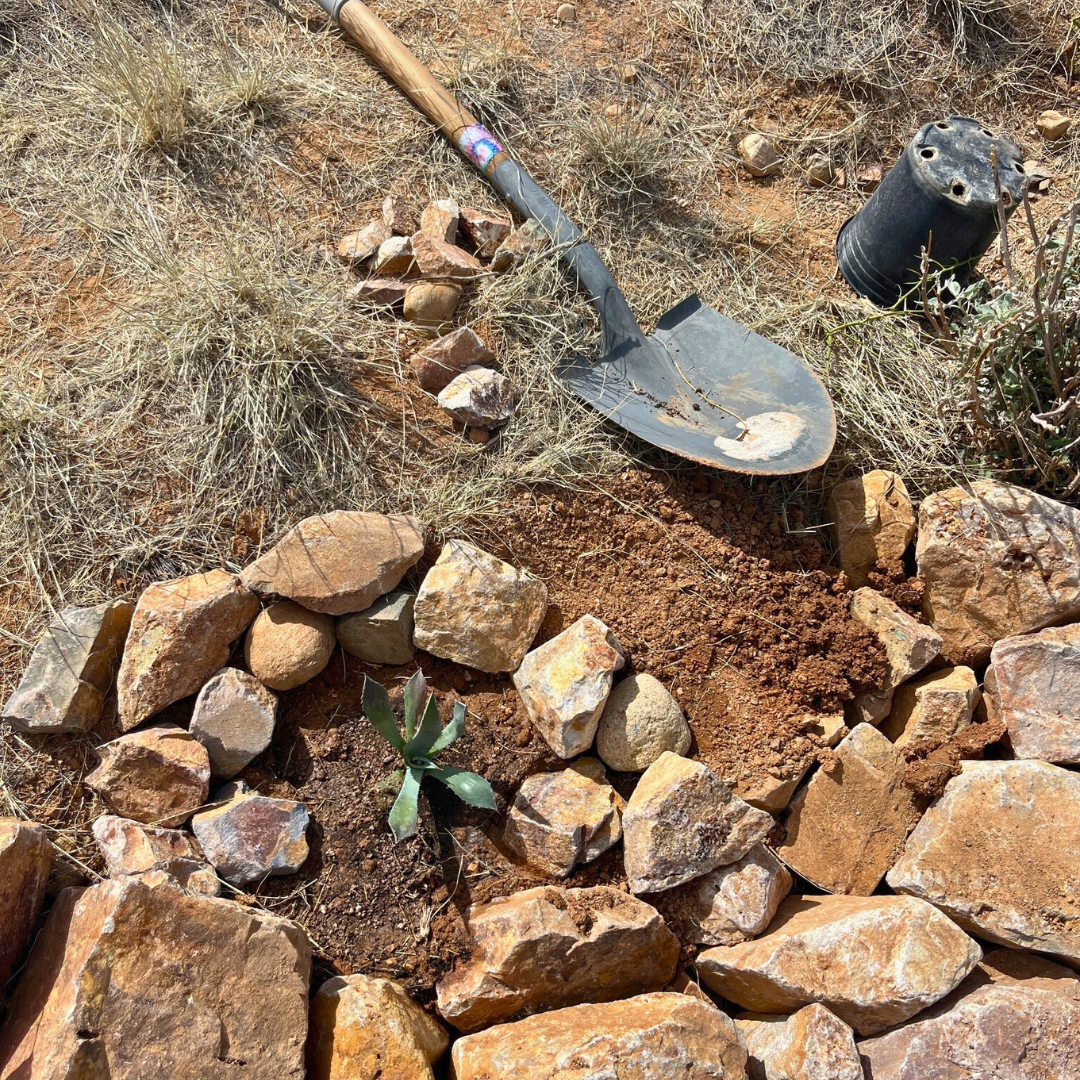
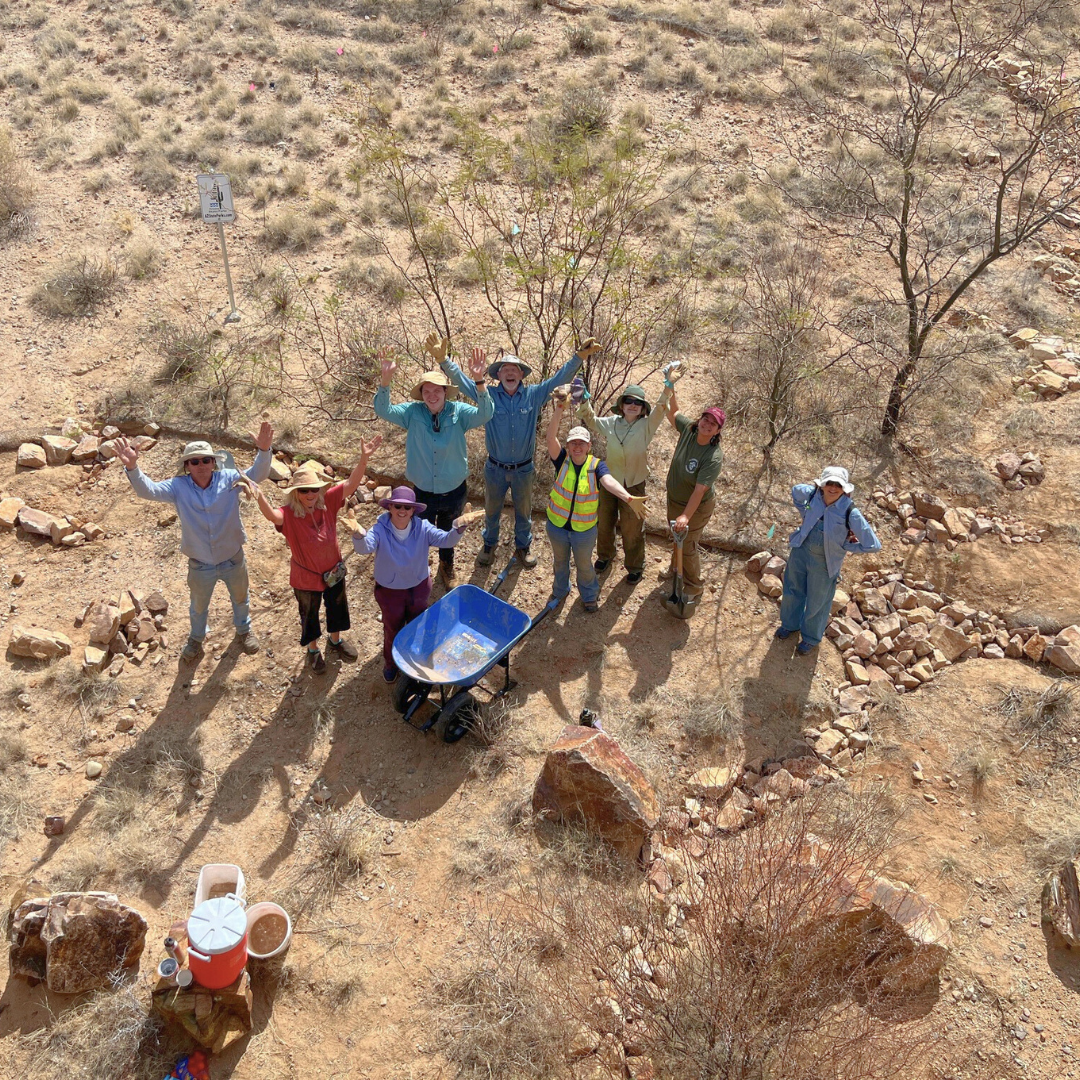
By spring, these flags turned to action. We returned to the Oracle Road wildlife underpass where volunteers helped us build erosion control rock structures. Over time these structures will repair and mitigate man-made erosion as they fill with sediment and slow the flow of rushing water. This work helped to stabilize the soil on the eroding slope and to catch rainwater for the surrounding plants, encouraging new plant growth and creating forage for passing herbivores.
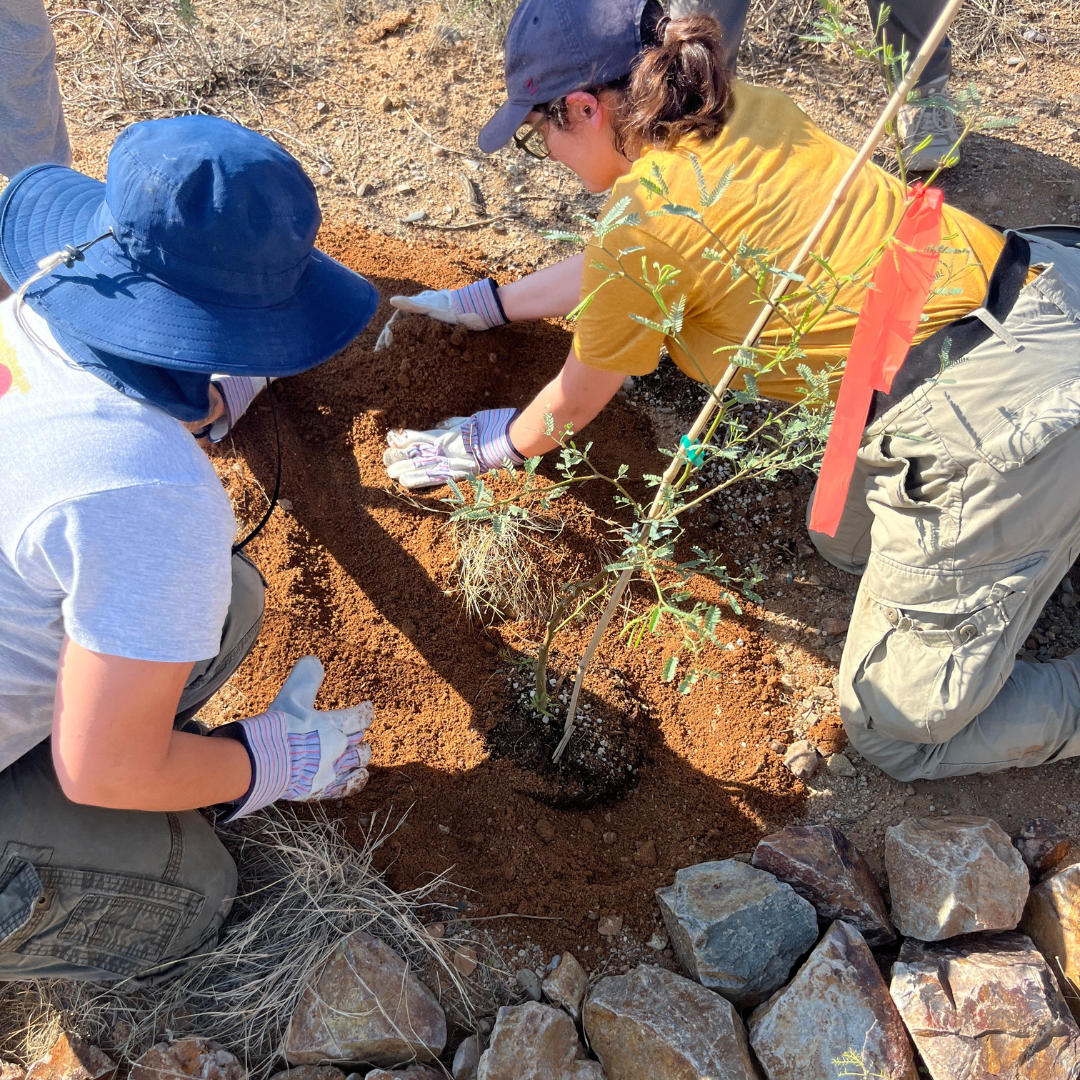
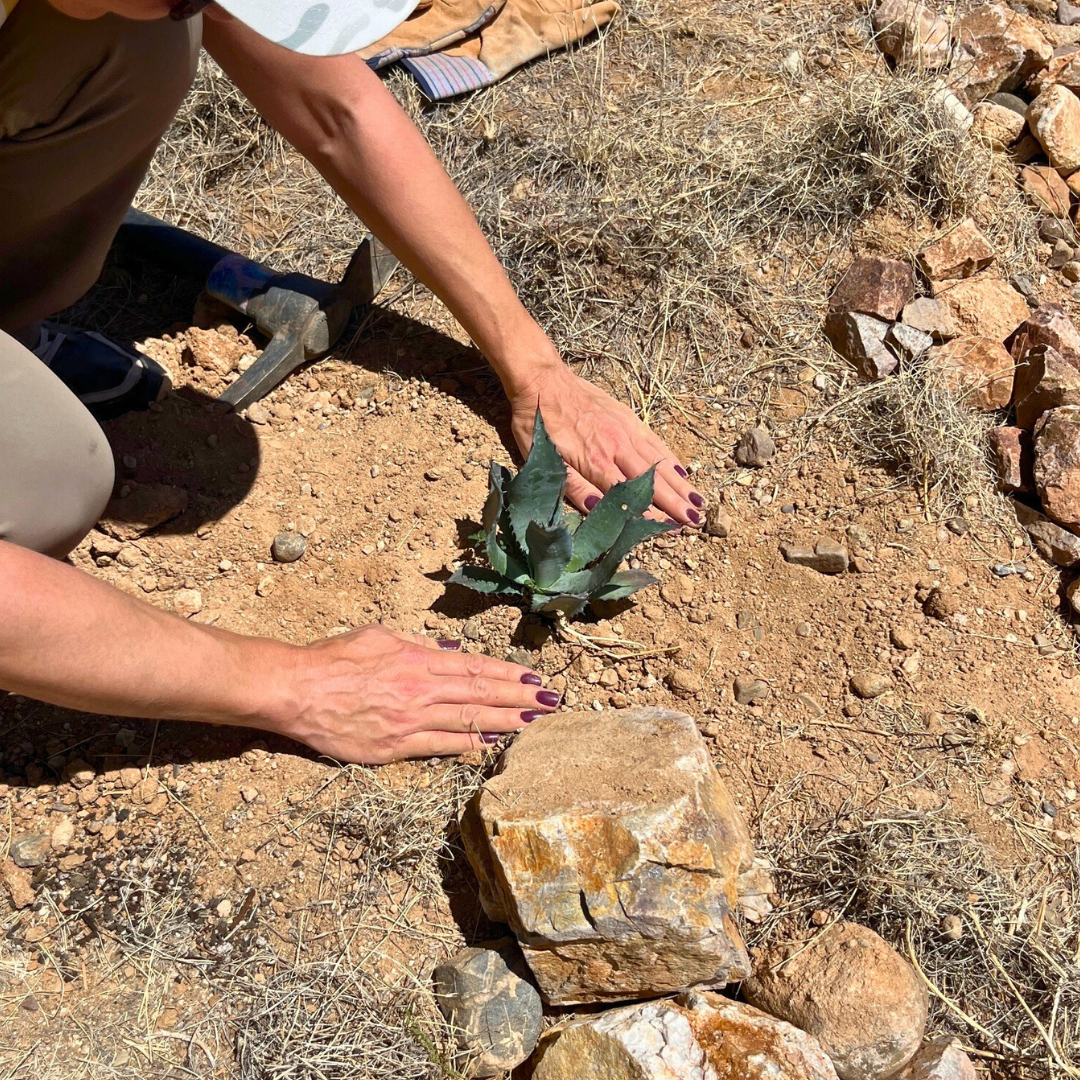
In partnership with Strategic Habitat Enhancements, we planted native Palmer’s agaves, chosen to provide resources for agave feeding bats and other pollinators.

May 17th, 2025
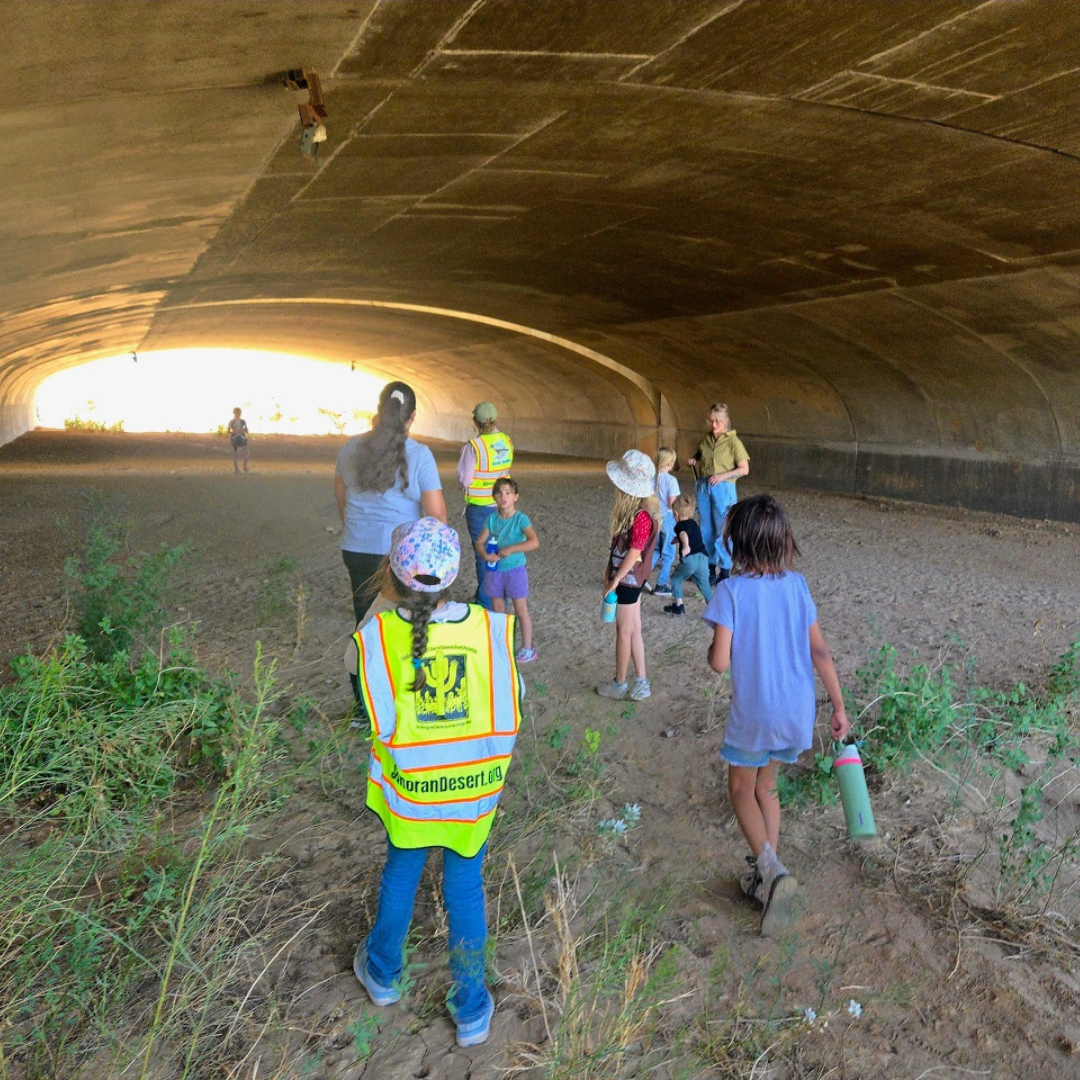
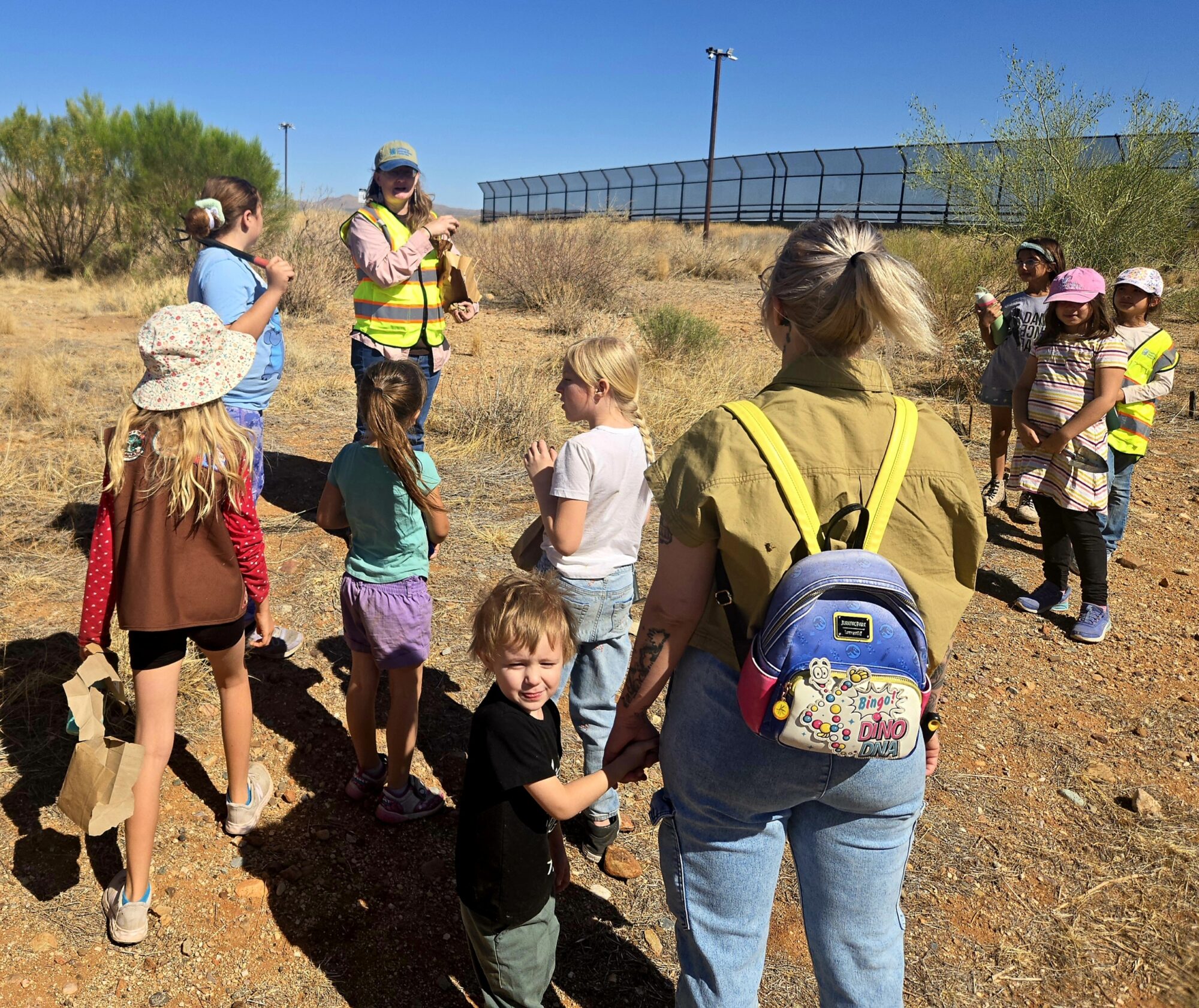
In May, we hosted a Desert Education Workshop for a troop of enthusiastic scouts! During this workshop, the scouts learned about wildlife tracking, Sonoran Desert wildlife and plants, and about how wildlife crossings can help both people and animals. They also helped us broadcast the seedballs we made in the spring.

July 19th, August 9th and August 10th
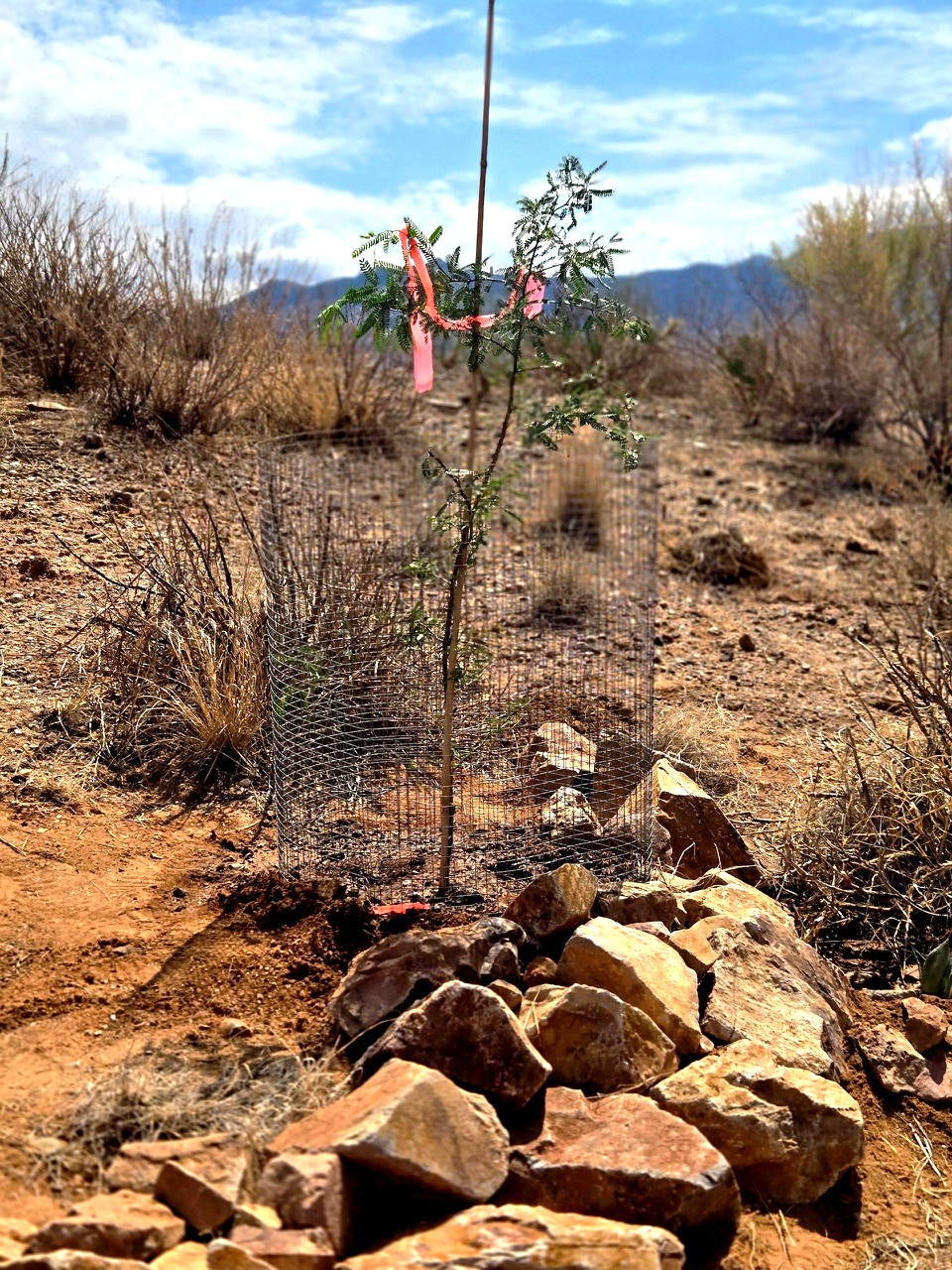
For our final workdays of this year’s project, volunteers joined us at the wildlife underpass to continue erosion work, plant 10 mesquite trees, build windrows and for another Desert Education workshop!
Windrows are brush piles made to provide cover for small wildlife. Volunteers helped us build one windrow along the wall of the underpass. While we often see larger mammals like mule deer, coyotes, javelinas, and bobcats using the crossing, we haven’t seen very many tracks or photos of smaller species. They’re more vulnerable in exposed spaces, so structures like this windrow help them feel protected and encourage safe passage.
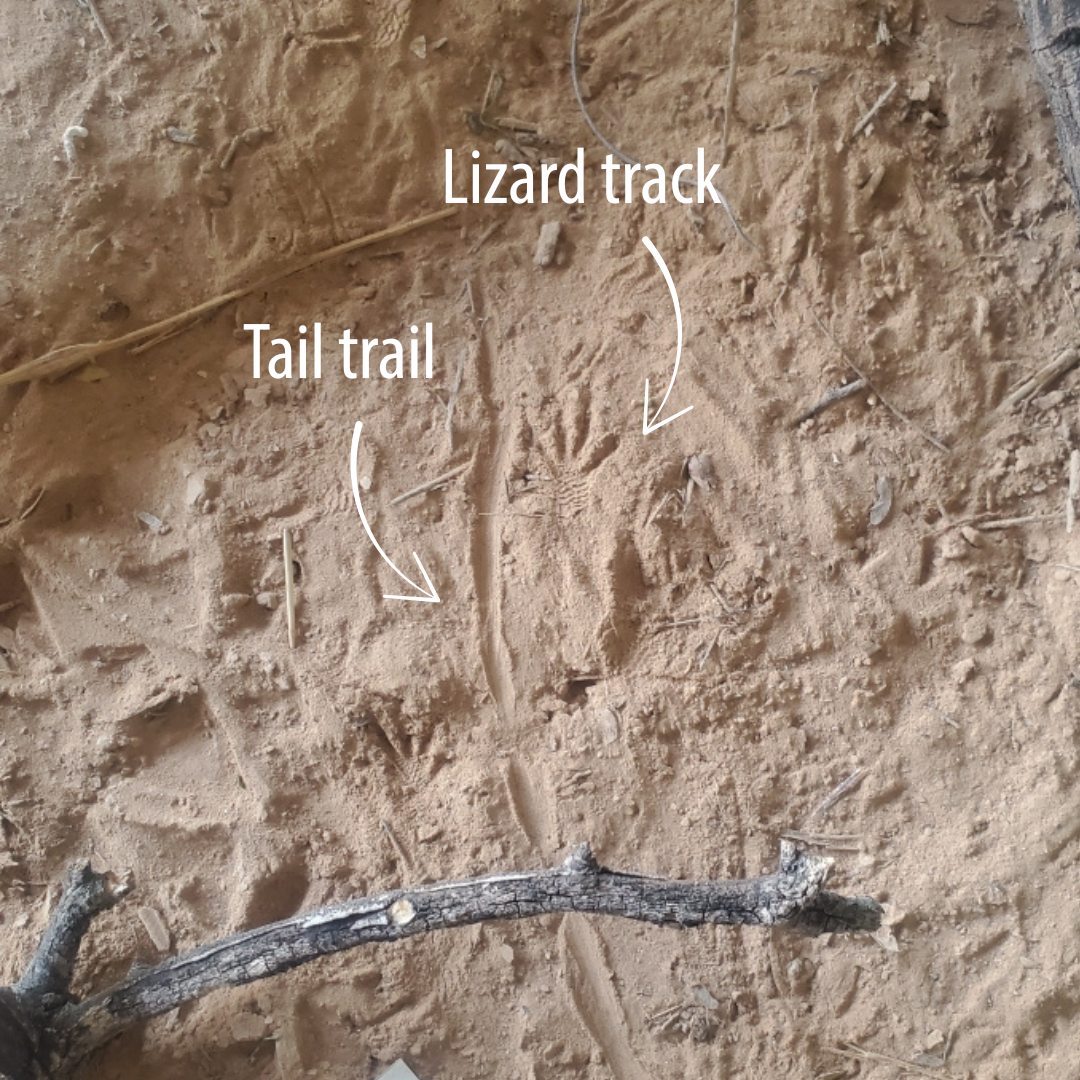
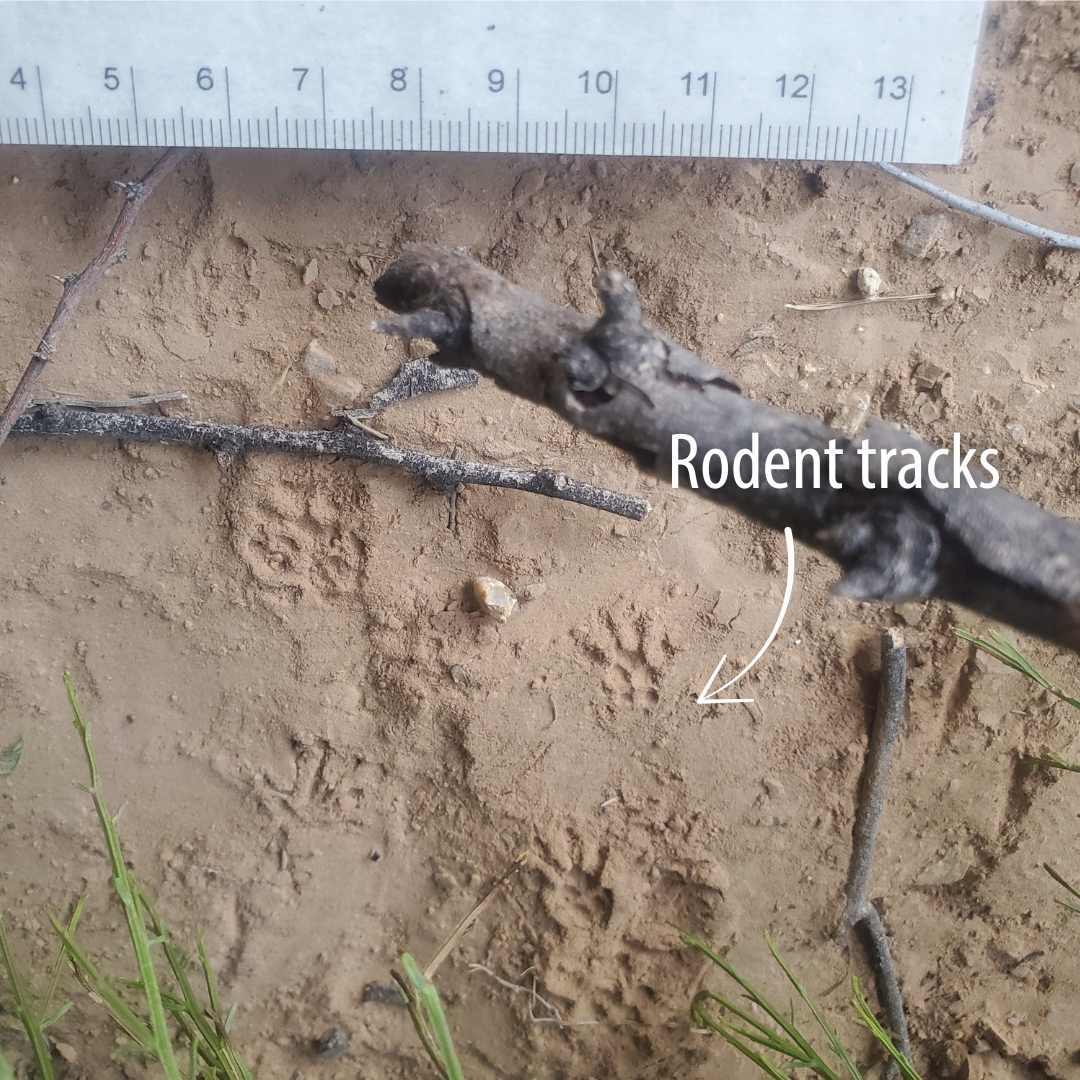
Then on August 10th, we held a Desert Education workshop with Girl Scouts. They learned about wildlife tracking and how wildlife crossings help Sonoran Desert animals. To our delight, they found fresh tracks from rodents and reptiles already using the new windrow!
Additional project achievements
Wildlife funnel fence survey
For this project, Coalition staff and volunteers set out to survey the wildlife funnel fencing along Oracle Road between the wildlife crossings. Wildlife funnel fencing is important for helping animals find and cross the Ann Day Memorial wildlife bridge and underpass and stay off the road, which is why it’s important to check for holes or cuts to the fence. We discovered a few instances of damage that we will be reporting to ADOT.

Highway cleanups
Volunteers joined us for four highway cleanups from 2024-2025, removing 60+ bags of trash and buffelgrass from our adopted stretch of Oracle Road near the wildlife crossings.
Project report – 2024-2025
The goal of this report was to organize CSDP’s Oro Valley wildlife camera monitoring data and analyze results to compare wildlife diversity and movement patterns before and after construction of the Oracle Road wildlife crossings, as well as before and after the habitat improvements on the crossing structures. This report aims to create a foundation of habitat restoration data and to measure the success of the project. Read the full report here!

Thank you for all your hard work and dedication to this project!
With every choice we made over the course of this project, we were mindful of the short-term and long-term impacts for the habitat and wildlife. The plants and seed mixes that were spread at the crossings were specially curated by Strategic Habitat Enhancements to complement the surrounding landscape and fill in the gaps left after buffelgrass removal. When doing erosion control work, our staff biologist ensured the new structures would not limit or disturb wildlife movement. We were glad to take on the role of environmental stewards at this site, but it is a reminder that all future wildlife crossing structures should require a formal, long-term maintenance plan that accompanies the build and initial planting. As the only organizations working on this project, it was our goal that this work invested in the future of the habitat at these crossings becomes self-sustaining over time.
THANK YOU to all who joined us at our workdays and workshops this year! Your efforts contributed to lasting change in the habitat at the wildlife crossings and helped provide resources for the diverse species that depend on these crossings to pass safely through the Santa Catalina and Tortolita Mountains.
Special thanks to Carianne Funicelli from Strategic Habitat Enhancements for helping us lead these efforts and for bringing all the tools, rocks, plants, and expertise that we value so much! Carianne also completed a final plant assessment survey for this project site, thank you! This project is funded in part by the Santa Cruz Valley National Heritage Area – Thank you for your support for our stewardship efforts in the Santa Cruz Valley.


Thanks to another grant from the Santa Cruz Valley National Heritage Area, our work at the Oracle Road wildlife crossings will continue through August 2026, where we will be finalizing our erosion control and habitat restoration work, and removing invasive plant species. Under this grant, we will also have some exciting new opportunities in the Tucson-Tortolita Mountains wildlife linkage. Stay tuned for more details coming soon!
Gallery