
What is Interstate 11?
The Interstate (I-11) project is a proposed new federal interstate corridor through Arizona that would reshape regional transportation in Pima County by linking Nogales at the Mexican border and extending north toward Phoenix and beyond.
What is the “West Option”?
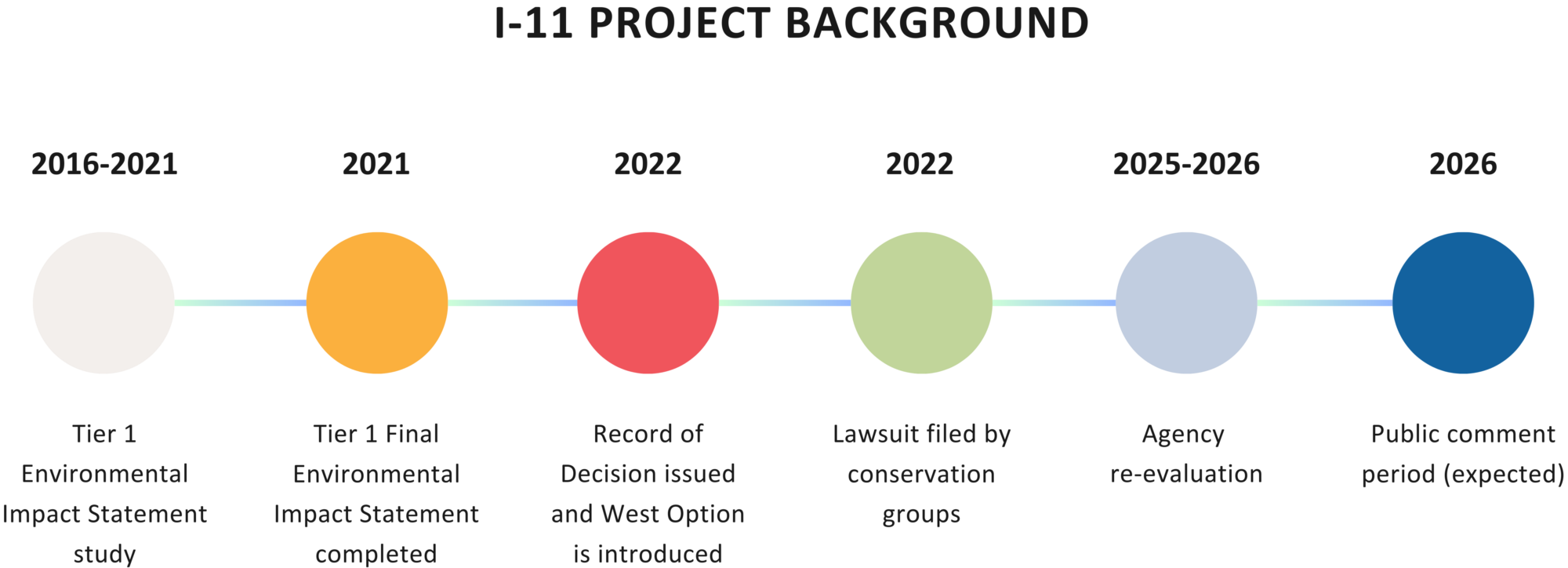
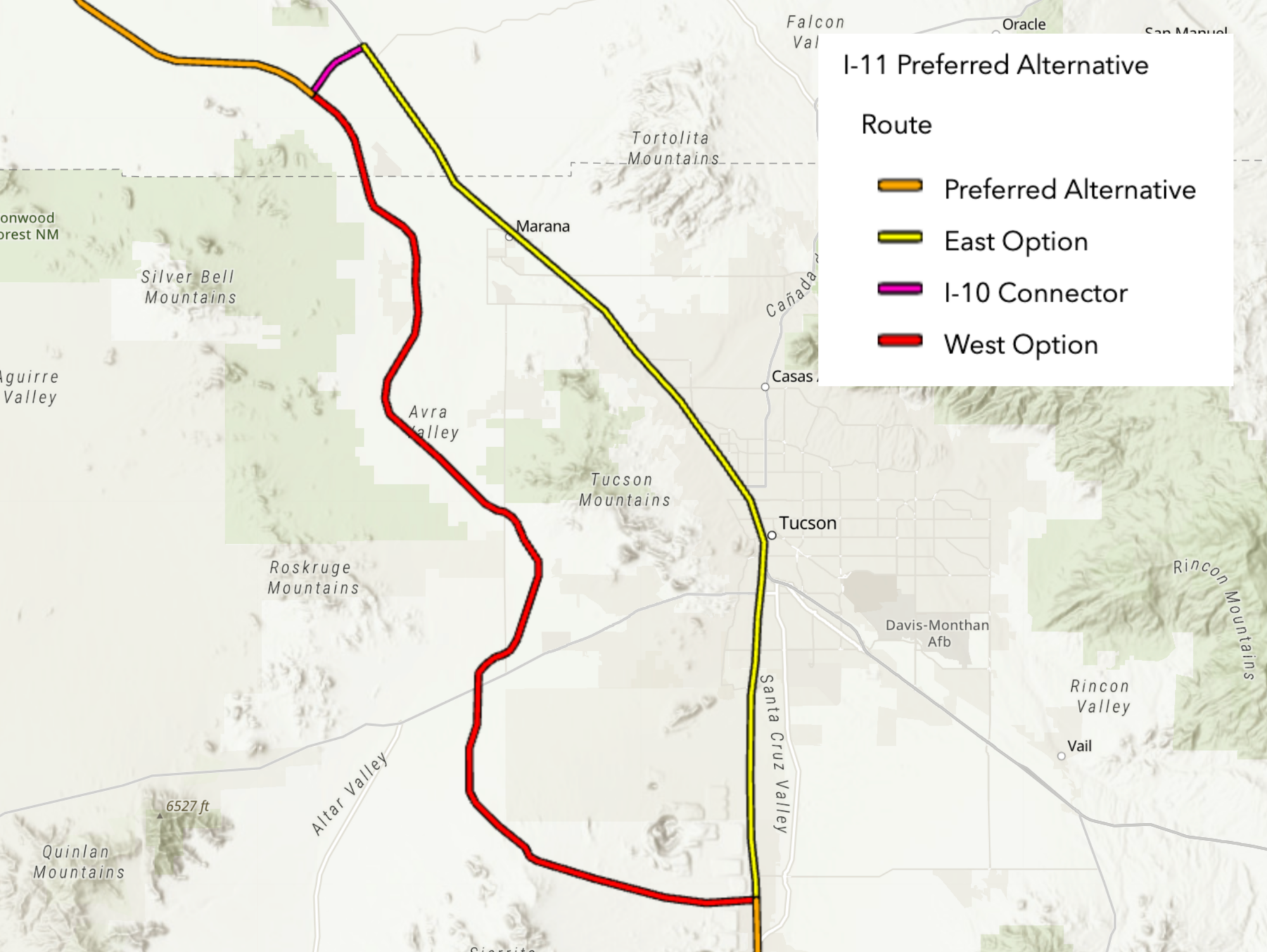
In November 2021, the Federal Highway Administration issued a Record of Decision for the Tier 1 Environmental Impact Statement, advancing multiple corridor options for Interstate 11 across the Tucson region, including the West Option through Avra Valley and an eastern route or the East Option co-located with I-10. Check out the route map for more.
What does it mean for the Sonoran Desert?
The West Option would bypass Tucson through rural Altar and Avra Valleys, a landscape bordered by Tribal Nations, natural undisturbed landscapes, residential areas, wildlife corridors, and treasured public lands — all of which will be irreparably harmed by a nearby freeway.
This proposed freeway would be directly adjacent to Saguaro National Park and Ironwood Forest National Monument, damaging natural resources, severing wildlife corridors and degrading our experience of the Sonoran Desert, especially in the Tucson Mountains.
The Coalition is STRONGLY opposed to the proposed I-11 West Option. This fight isn’t over! Transportation needs should be met by improving existing highways without sacrificing the Sonoran Desert.
Quick links

Understanding I-11
Lawsuit
In April 2022, four conservation groups sued the Federal Highway Administration in federal court, arguing that it conducted an inadequate environmental review before approving possible routes for the proposed highway — including the West Option. You can read the full legal filing here.

In January 2025, as part of this lawsuit, the Federal Highway Administration and the Arizona Department of Transportation were ordered to reevaluate the environmental impact statement (EIS) and open a new public comment period.
Planning for I-11 in Southern Arizona is now effectively on hold pending the outcome of that re-evaluation, and we expect a new 60-day public comment period to open in Spring 2027.
The Coalition is currently monitoring HB 2601 in the Arizona Legislature, which would divide the Interstate 11 project into two separate segments. If passed, it could nullify our current lawsuit against the Federal Highway Administration and the Arizona Department of Transportation, requiring us to refile. Should the bill move forward, we are prepared to work with our co-plaintiffs to urge Governor Hobbs to veto it.
Latest status
The Southern Arizona portion of the I-11 project remains in the planning and environmental review phase, with no construction underway.
We expect a new 60-day public comment period to open in 2027. Public input remains a critical part of the I-11 decision-making process. Community voices will continue to shape outcomes as the project progresses — stay engaged and sign up for updates to be notified when new public comment opportunities are announced.
West Option route map
FAQ
Q. Has I-11 been approved?
A: No, and no final route has been selected.
Q: Why is there concern about I-11?
A: One of the proposed routes, the West Option, could cause irreversible harm to public lands, wildlife habitat, cultural and tribal resources, outdoor recreation areas, and private property.
Q: What decisions are being made now?
A: In January 2025, a judge ordered the Federal Highway Administration and the Arizona Department of Transportation to re-evaluate the project’s environmental impact statement and open a new public comment period. We expect the new public comment period some time in 2026.
Q. When will decisions be made?
A: Decisions will be made after the environmental review process is complete, including the Tier 1 (corridor-level) study and subsequent Tier 2 (project-level) studies, and after public comments are reviewed. Because each phase requires analysis and public input, the process may take several years.
Q. Where can I find historical documents related to I-11?
A. You can find a detailed document library here.
Direct impacts of the West Option: the talking points
- Cost and length. The proposed East Option would co-locate I-11 with I-19 and I-10 through Tucson. This is both cheaper and shorter than the West Option, and has the support of local jurisdictions such as Pima County and the City of Tucson, who oppose the West Option.
- Irreversible environmental impact. The West Option would damage natural resources and degrade the visitor experience on public lands. Shockingly, it is proposed within just a few hundred feet of Ironwood Forest National Monument, Saguaro National Park, and Tucson Mountain Park.
- Threats to protected species. The West Option would destroy habitat for the threatened cactus ferruginous pygmy owl and the endangered Pima pineapple cactus.
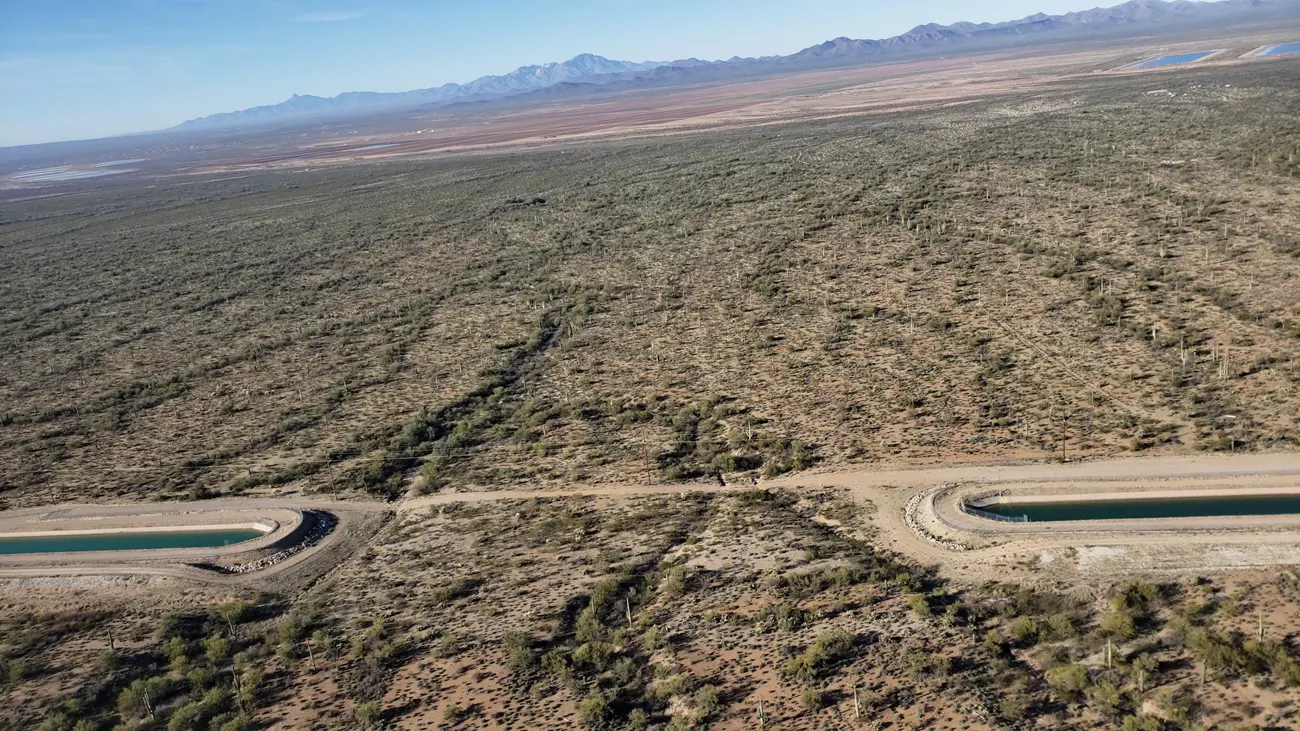
- Wildlife corridors. Wildlife already struggle with existing infrastructure, such as Interstate 10 and the CAP canal. Further fragmentation would destroy the ability of wildlife species such as desert bighorn sheep to disperse, roam, find new mates, and expand their home ranges. The Bureau of Reclamation’s Tucson Mitigation Corridor was created to offset impacts from the construction of the CAP canal in the Avra Valley, which interrupts existing wildlife corridors. If the West Option cuts through this mitigation land, animals will have nowhere else to go.
- Cultural impacts. The I-11 West Option would cause irreversible harm to culturally significant landscapes of the Tohono O’odham Nation and the Pascua Yaqui Nation. This route would also disturb cultural resources and sacred lands.
- Impact on tourism and recreation. The scenic desert along the proposed I-11 West Option is beloved by residents and tourists. Recreation hubs for the region, such as the Arizona-Sonora Desert Museum and Saguaro National Park, would be directly and negatively affected.
- Groundwater impacts. In 2019, the City of Tucson opposed the I-11 West Option because it would place a freeway adjacent to the City’s major water supply. We cannot guard against a toxic spill that would threaten Tucson’s most vital resource.
- Permanent change in landscape character. The West Option would cause significant noise, air, and light pollution, encourage urban sprawl, and destroy the rural character of the Altar and Avra Valleys.
- Community displacement. Many people live or maintain working landscapes along the West Option, including communities that may not be able to engage with or be aware of the Federal Highway Administration’s public input process. Homes and properties would be forcibly condemned to construct the West Option, and property values and quality of life otherwise impacted.
Critically, no mitigation could offset these negative impacts.
Impacts to Public Lands and Protected Areas
- Saguaro National Park. The proposed I-11 West Option would place a major freeway corridor directly adjacent to the park, fragmenting the surrounding landscape that sustains the park’s ecological integrity. Wildlife that depends on connected desert habitat would face significant barriers to movement, limiting access to food, water, and breeding areas. In addition to fragmenting habitat, the highway would degrade air quality and alter the park’s natural soundscape by increasing noise pollution, disrupting wildlife behavior, and detracting from the visitor experience. It would also diminish the park’s renowned dark skies, undermining the very qualities the park was established to protect.
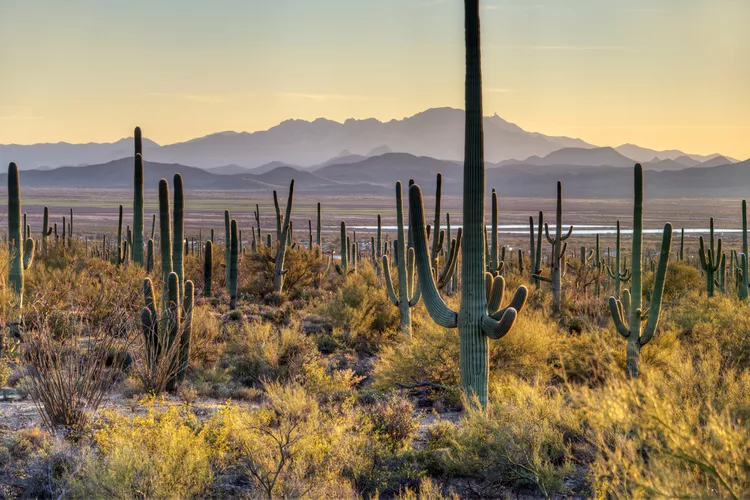
- Tucson Mountain Park. The I-11 West Option would run near the park, introducing a high-speed freeway to a landscape known for quiet recreation and vital wildlife habitat. The project would degrade scenic views and increase noise and air pollution. The park, positioned between I-11 and I-10, would be permanently severed from the surrounding landscape. This isolation would significantly compromise wildlife movement, reduce ecological function, and decrease the visitor experience.
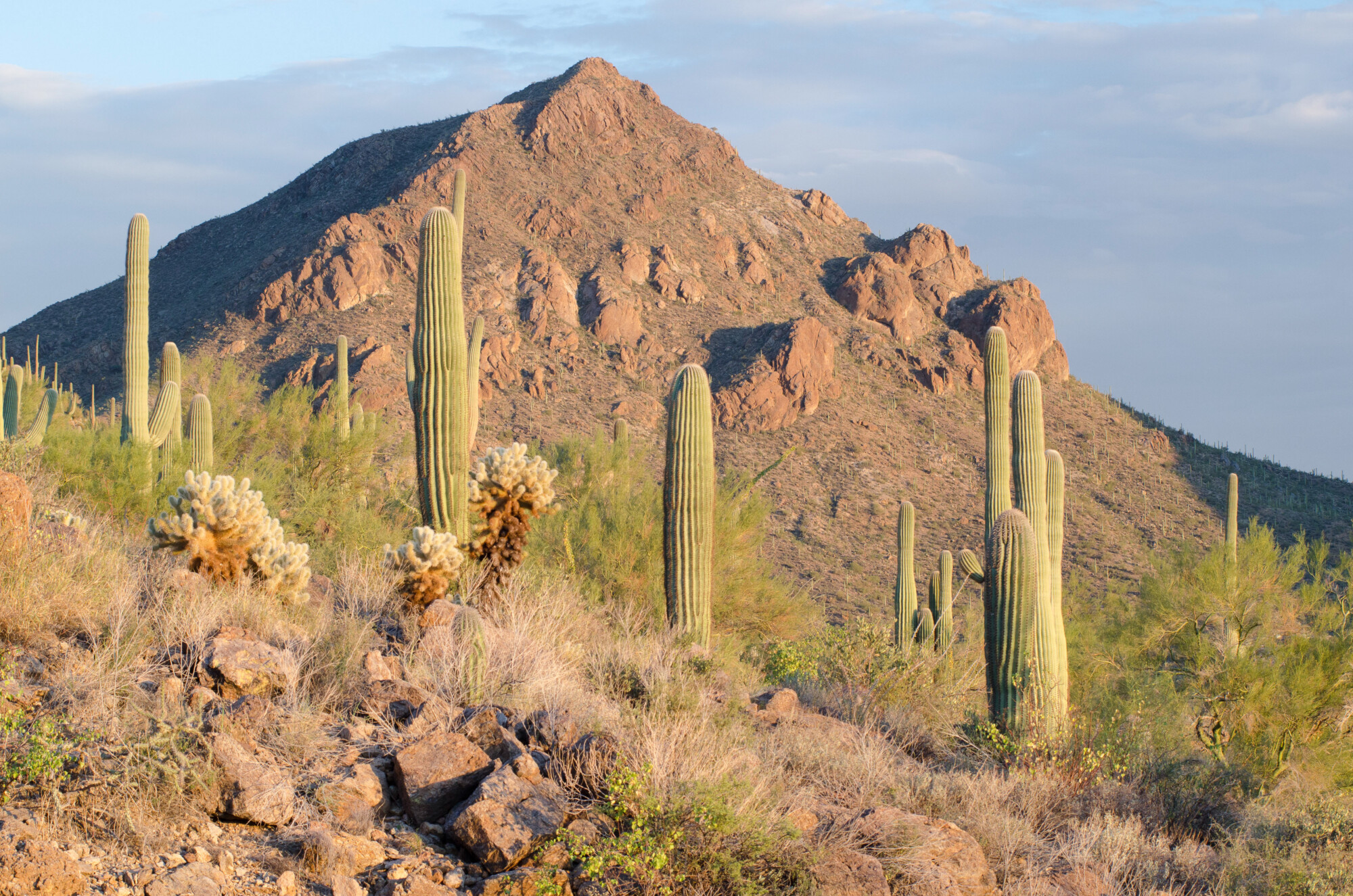
- Tucson Mitigation Corridor. The corridor was established as mitigation for the Central Arizona Project Canal to offset habitat fragmentation and restore wildlife movement across Avra Valley. Introducing I-11 through or adjacent to this corridor would undermine that investment by constricting one of the region’s most critical linkages. The corridor plays a unique role in reconnecting landscapes already fragmented by infrastructure, and further disruption would reduce landscape permeability and limit the long-term effectiveness of past conservation efforts.
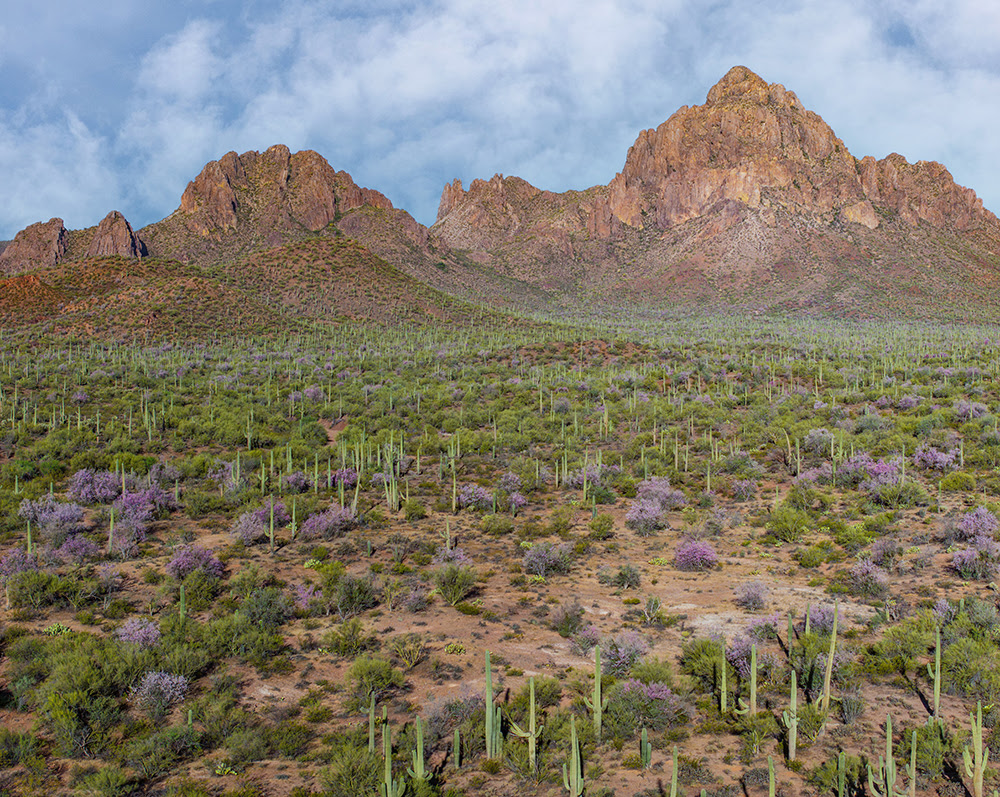
- Ironwood Forest National Monument. The proposed West Option would pass within a few hundred feet of the monument, putting sensitive desert habitat and cultural resources at risk. The monument supports a high diversity of Sonoran Desert species, including desert bighorn sheep and rare plants, all of which depend on large, undisturbed landscapes. A nearby freeway would fragment habitat, increase human disturbance, and degrade the monument’s ecological integrity and character, threatening one of southern Arizona’s most biologically rich areas.
Take action
Your voice matters!
Public participation is critical in this process.
Please speak up! And share news on I-11 on your social media and with your friends and family.
We love a repost, too — follow along with our work on Facebook and Instagram.


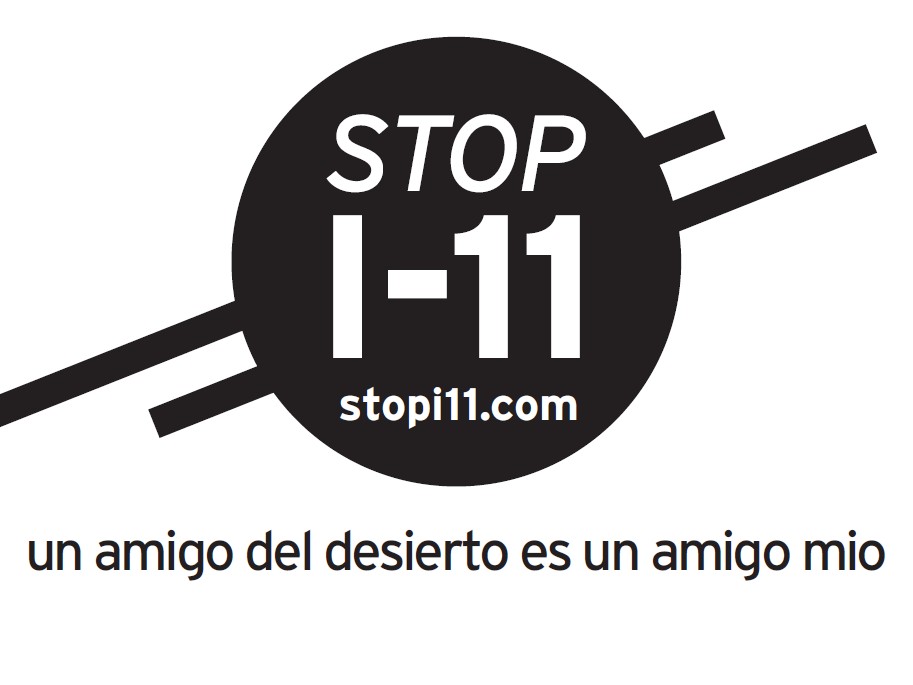
Get involved with a custom STOP I-11 yard sign.
We’re just months away from when we expect the Federal Highway Administration and Arizona Department of Transportation to open the public comment period on the Draft Environmental Impact Statement — all signs point to the comment period being in late 2026.
You can help NOW by spreading the word with a custom STOP I-11 yard sign!
Please note! This is a donation and not a sale.

WHEN: Starting July 8, 2026, signs will be ready to pick up (and available for several weeks).
WHERE:
The Historic Y
738 N 5th Ave
Tucson, AZ 85750
Business hours: Monday-Sunday, 8 am – 8 pm (signs available in the lobby)
Tucson City Council Ward 3 Office
1510 E. Grant Rd
Tucson, AZ 85719
Business hours: Monday-Friday, 9 am – 1 pm
We’ll be adding more pick-up locations across the county in the coming weeks and will keep you posted as they become available.
WHAT: A standard 24″x18″ yard sign and stake that you can use to spread the word with Stop I-11 branding and a choice of slogans.