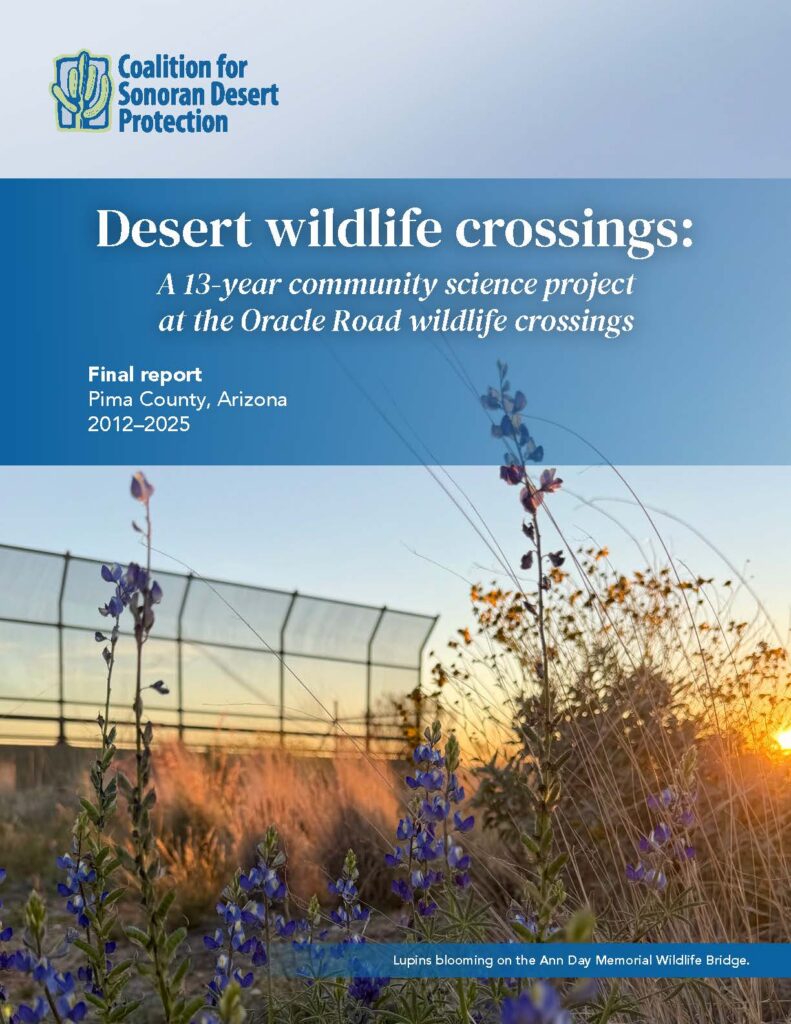
It’s here! Our final project report for our wildlife camera monitoring project in Oro Valley.
We spent 13 years learning about wildlife movement around Oracle Road, including what changed after the wildlife crossings were built in 2016. Looking at years of collected data, we set out to explore whether these crossings are working to help local wildlife.
Our conclusion: Yes, they do!
Read the full report here
Key takeaways
- In total, these crossings see about 3,500 animals every year.
- We documented over 65 species, meaning species diversity was high!
- We saw very few mesocarnivores, such as badgers — a sign that development is affecting this ecosystem.
- Rare cameos included Gila monster, desert tortoise, bighorn sheep, white-nosed coati, mountain lion, black bear, ringtail, spotted skunk, and striped skunk.
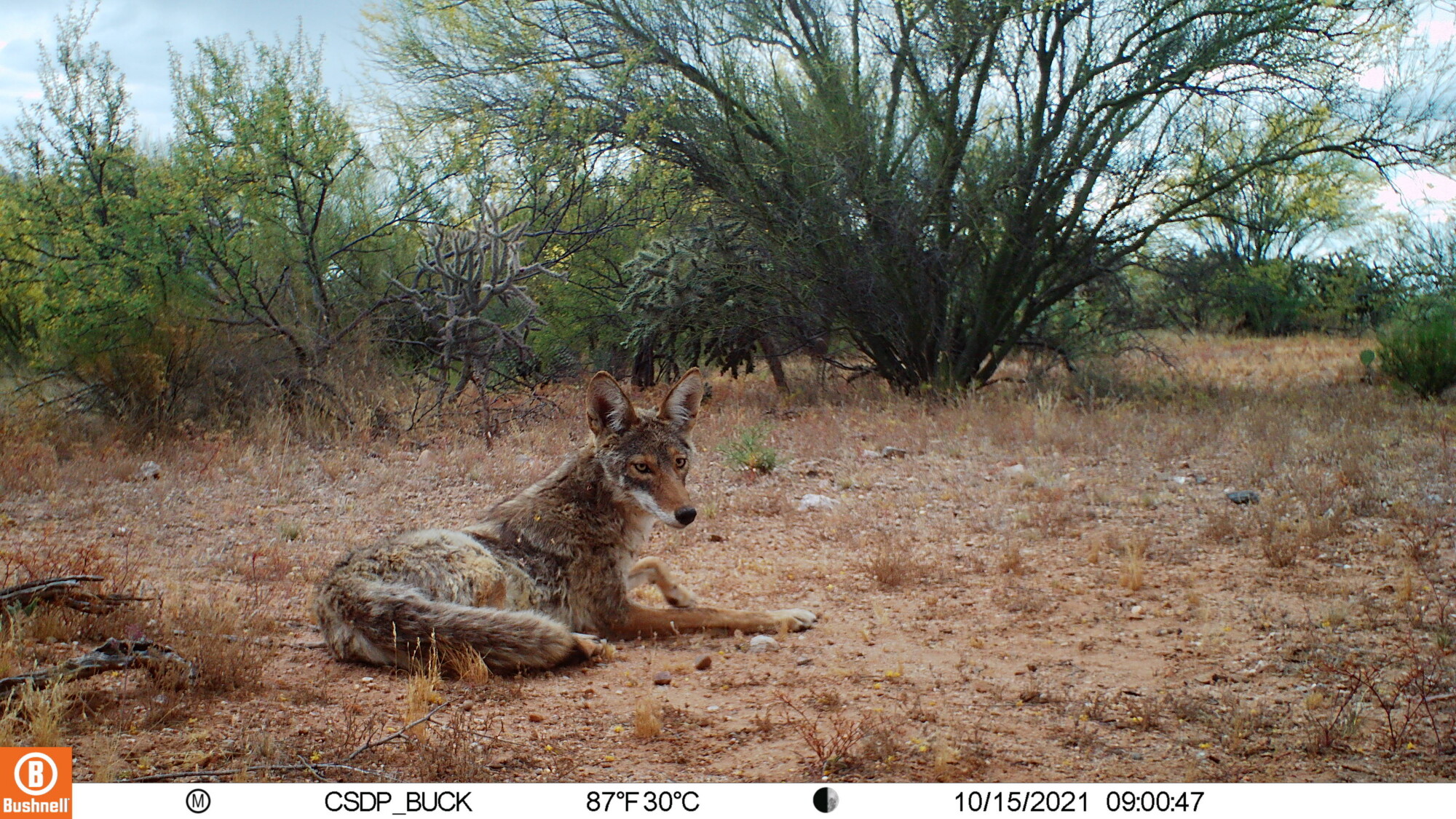
- Coyotes appear to play an important role as the area’s top predator. Overall, urban adapted species like coyotes and bobcats are doing well.
We hope that distinction will not stay ours for long.

Acknowledgements
We couldn’t have done this work without our community. Our interns and volunteers braved heat, snakes, floods, cacti, spiders living in camera cases, and gigantic amounts of camera data—yet never lost enthusiasm for the work.
Thank you to the Santa Cruz Valley National Heritage Area for funding this report!
In memory of Bob Cratty, Elizabeth Deupree, Josh Skattum, Pima County District 1 Supervisor Ann Day and dedicated to everyone who cares for the Sonoran Desert.