Over the last year, we got to partner with Friends of Ironwood Forest on an invasive plant species education program at Ironwood Forest National Monument — thanks to a grant from Tucson Electric Power (TEP).
Together, we’ve created educational handouts, updated online resources, and hosted invasive species scouting and volunteer workdays in the monument.
Prevent the spread!
Ironwood Forest National Monument, with its many dirt roads, is vulnerable to invasive species spread by cars, campers, and off-road vehicles.
When we visit the backcountry and public lands, we can accidentally carry unwelcome seeds. Seeds hitchhike on tires, boots, camping gear, and other equipment. In fact, an OHV or ATV can pick up hundreds to thousands of seeds in a single mile.
Help avoid the spread of invasives:
- Between journeys, wipe or brush off all tires and wheel areas, shoes, tents, coolers, and other gear.
- Avoid driving, parking, or camping in weeds or muddy areas where seeds can easily stick.
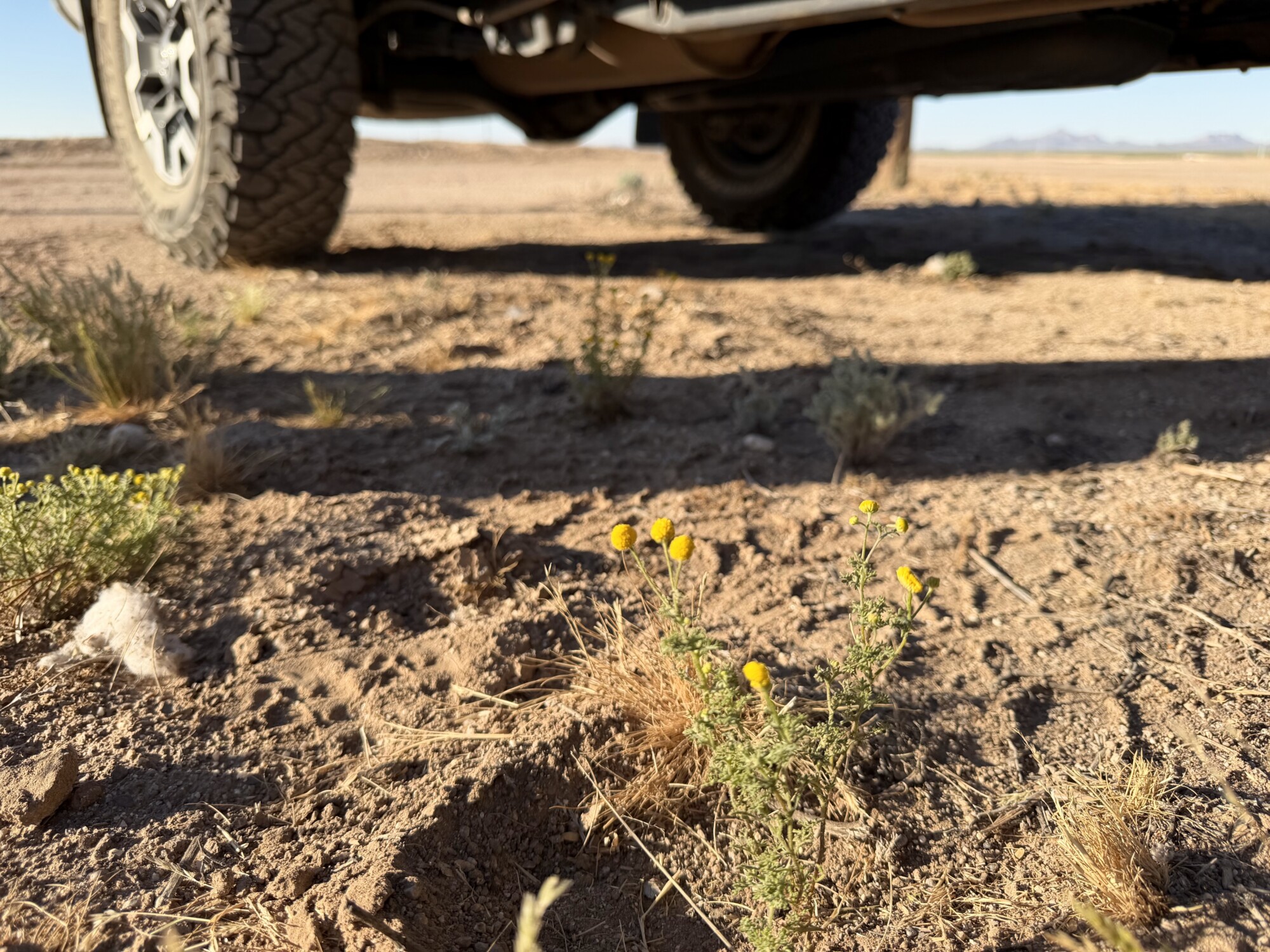
Why are buffelgrass and stinknet so dangerous?
- They fuel fast-moving wildfires that threaten the Sonoran Desert, wildlife corridors, homes, and infrastructure.
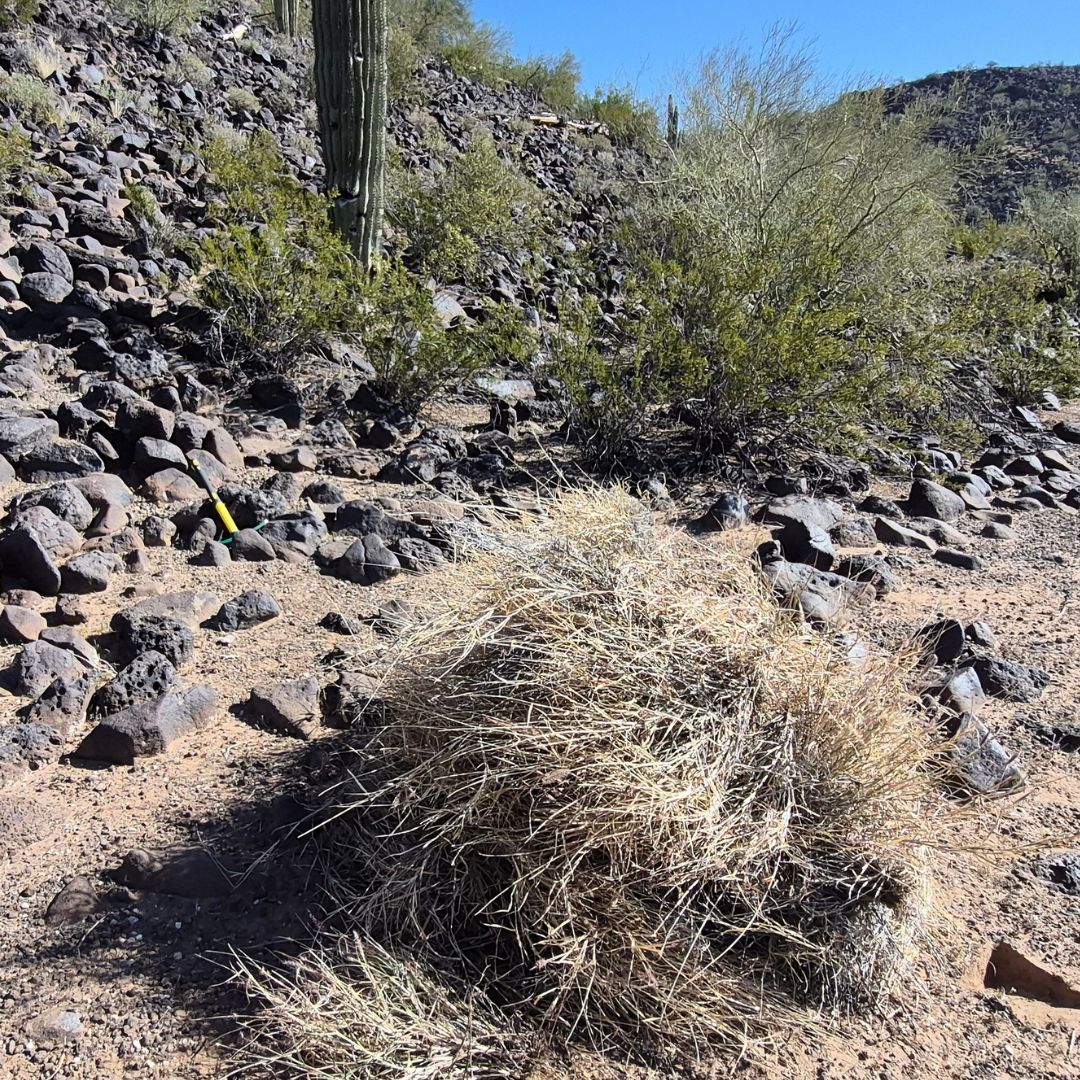
- Buffelgrass burns so intensely that it kills ancient saguaros and can sterilize the soil, making it even easier for buffelgrass to take over.
- Stinknet fires produce irritating smoke that can affect people and wildlife.
- Both outcompete native plants for space, water, and pollinators, sometimes covering entire washes and hillsides.
Learning in the field
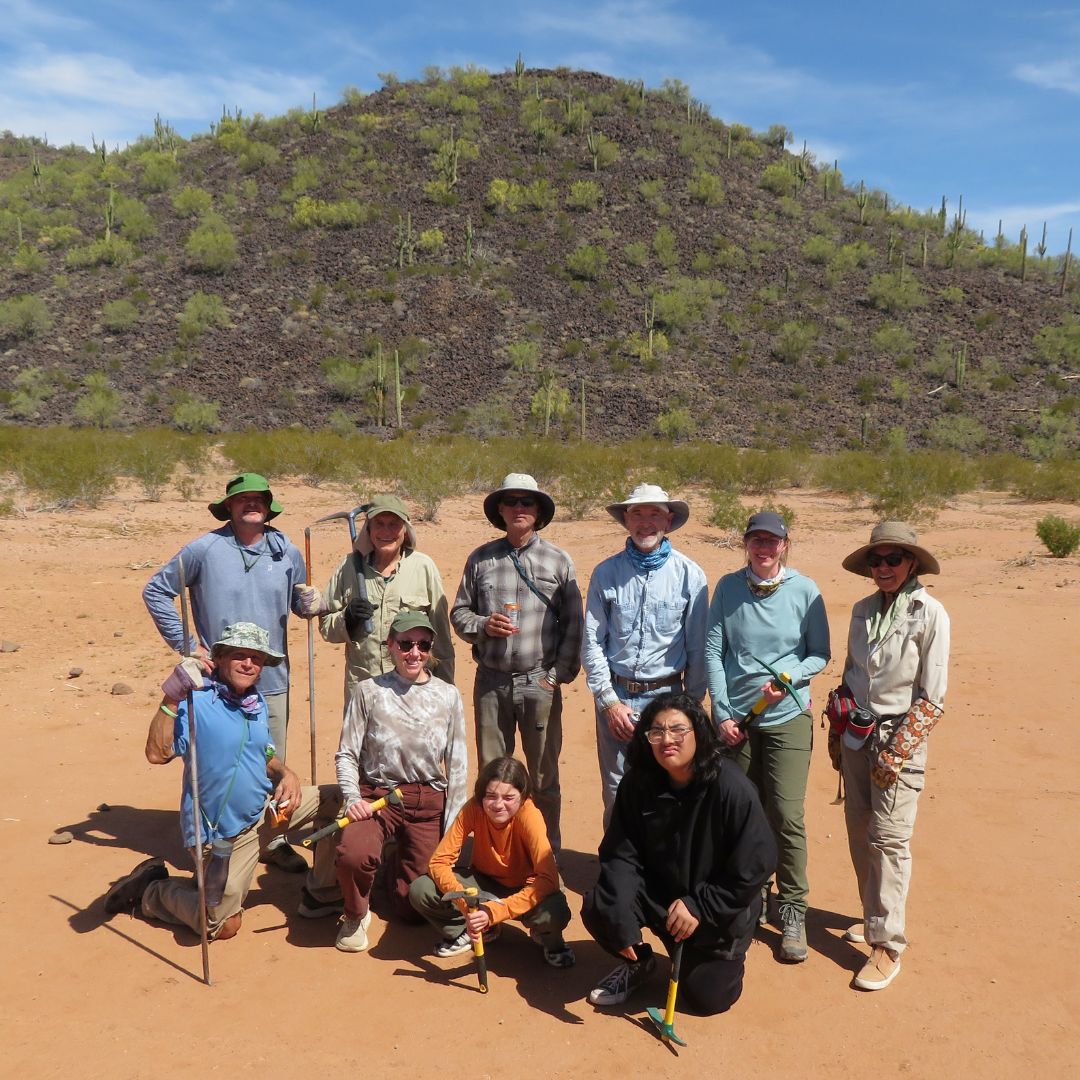
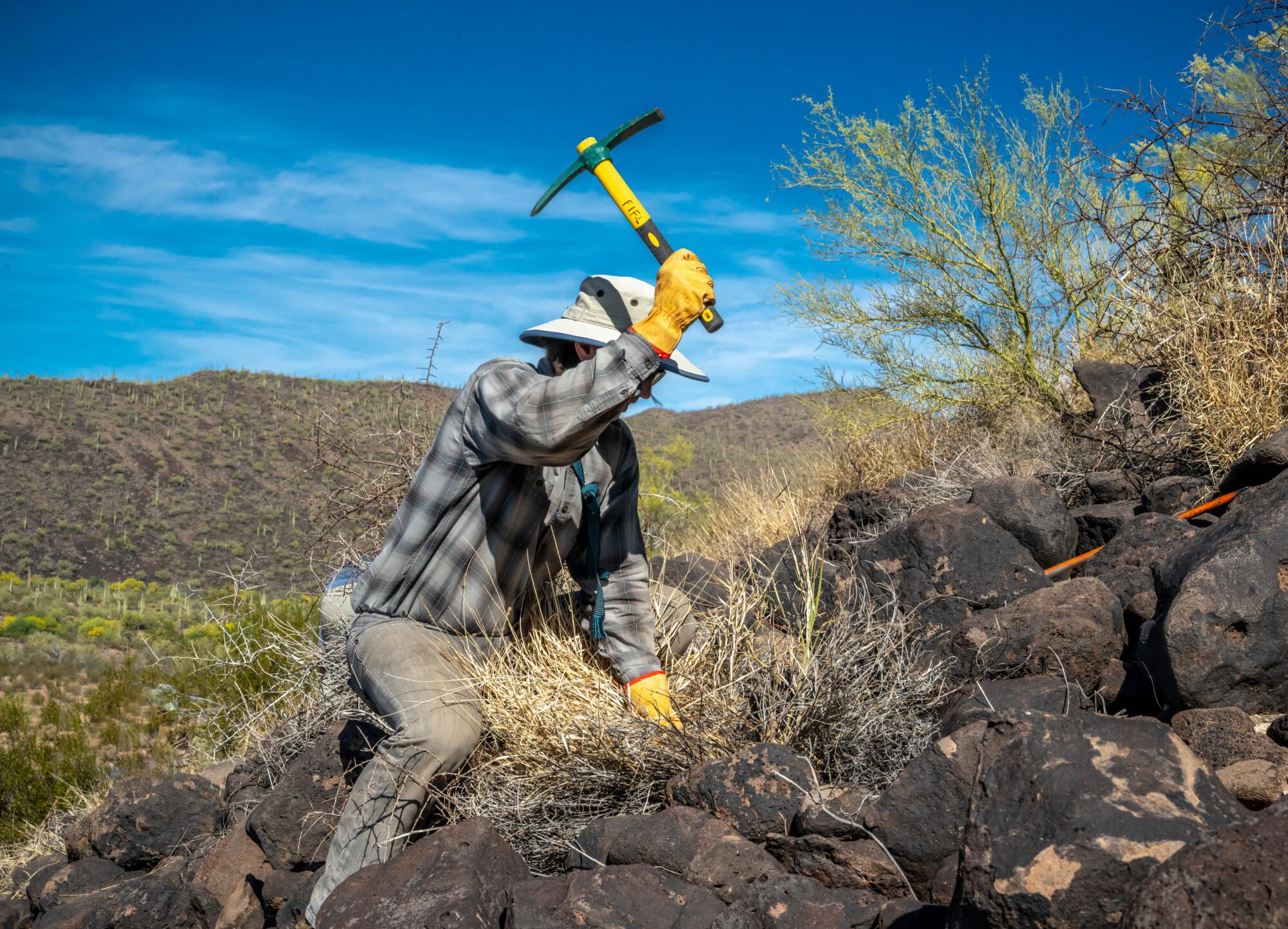
In spring 2026, Friends of Ironwood Forest and CSDP hosted three volunteer workdays where participants learned to identify and remove buffelgrass and stinknet.
We were lucky to be joined by Frank Staub, a local legend in buffelgrass removal.
Even after clearing entire hillsides, we only scratched the surface. That’s why prevention is so important — and so much easier than removal.


Friends of Ironwood Forest continues to expand this work, with plans for trailhead boot brushes, additional volunteer events, and on-site checkpoints and other educational outreach during the cooler months.

This project was funded in part by Tucson Electric Power as part of TEP’s 2025 wildfire prevention priority.