Written by CSDP Wildlife Biologist, Jessica Moreno.
In the thickly vegetated oak woodland slopes and riparian creek bottoms of Sopori Creek, warm light filtered through the tall and sturdy sycamore trees.
It was the summer of 2021 and Carolyn Campbell, founding Executive Director of CSDP, and I were here to meet Diana Freshwater, Liz Patterson, and Cameron Becker of the Arizona Land and Water Trust (AZLWT) to discuss the possibility of a joint wildlife camera monitoring effort.
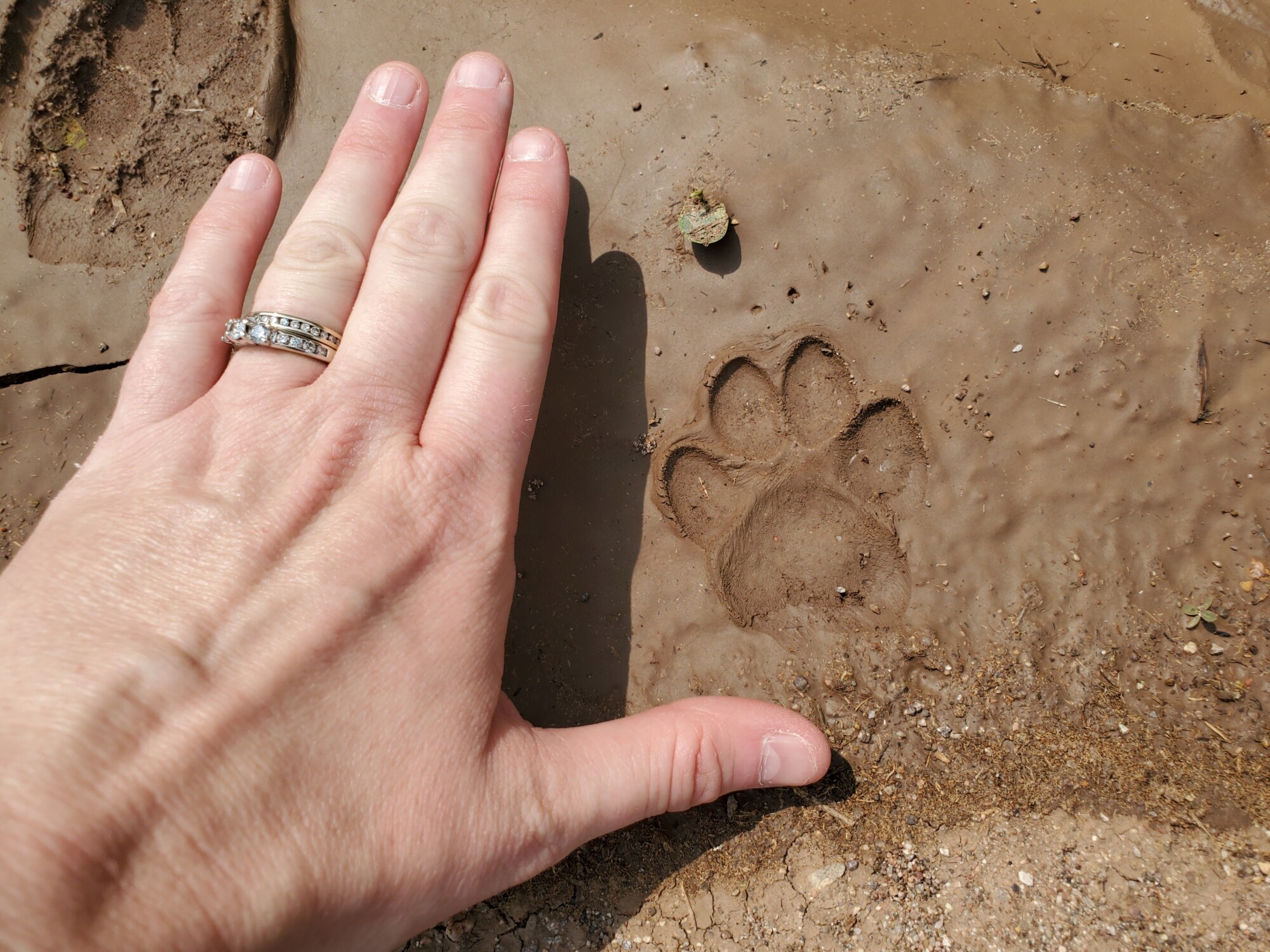
There was plenty to distract us from talking shop in such a beautiful area – bobcat tracks delicately punctuated the wet edges where spadefoot and river toad tadpoles tickled the algae mats with feverish kisses.
Right at the border of Pima and Santa Cruz counties, near Amado, Arizona, the Mexican tropical (also known as neotropical) influences of the borderlands and Sky Islands appear suddenly and prominently. Sopori Creek graces a large portion of the Santa Rita – Cerro Colorado – Atascosa Mountains Wildlife Linkage, providing a source of precious year-round water and a natural riparian corridor for wildlife movement.

Setting the traps
Our goal here was simple: we would place five wildlife cameras to gather outreach quality photos and video of the varied species found here, to help the Arizona Land and Water Trust secure permanent protection for this precious landscape.
Wildlife camera traps are designed to detect wildlife using heat and motion sensing technology. They can provide data on species location, population sizes, and how species are interacting with each other and their environment including recruitment and predation. They don’t provide data on species absence, only presence.
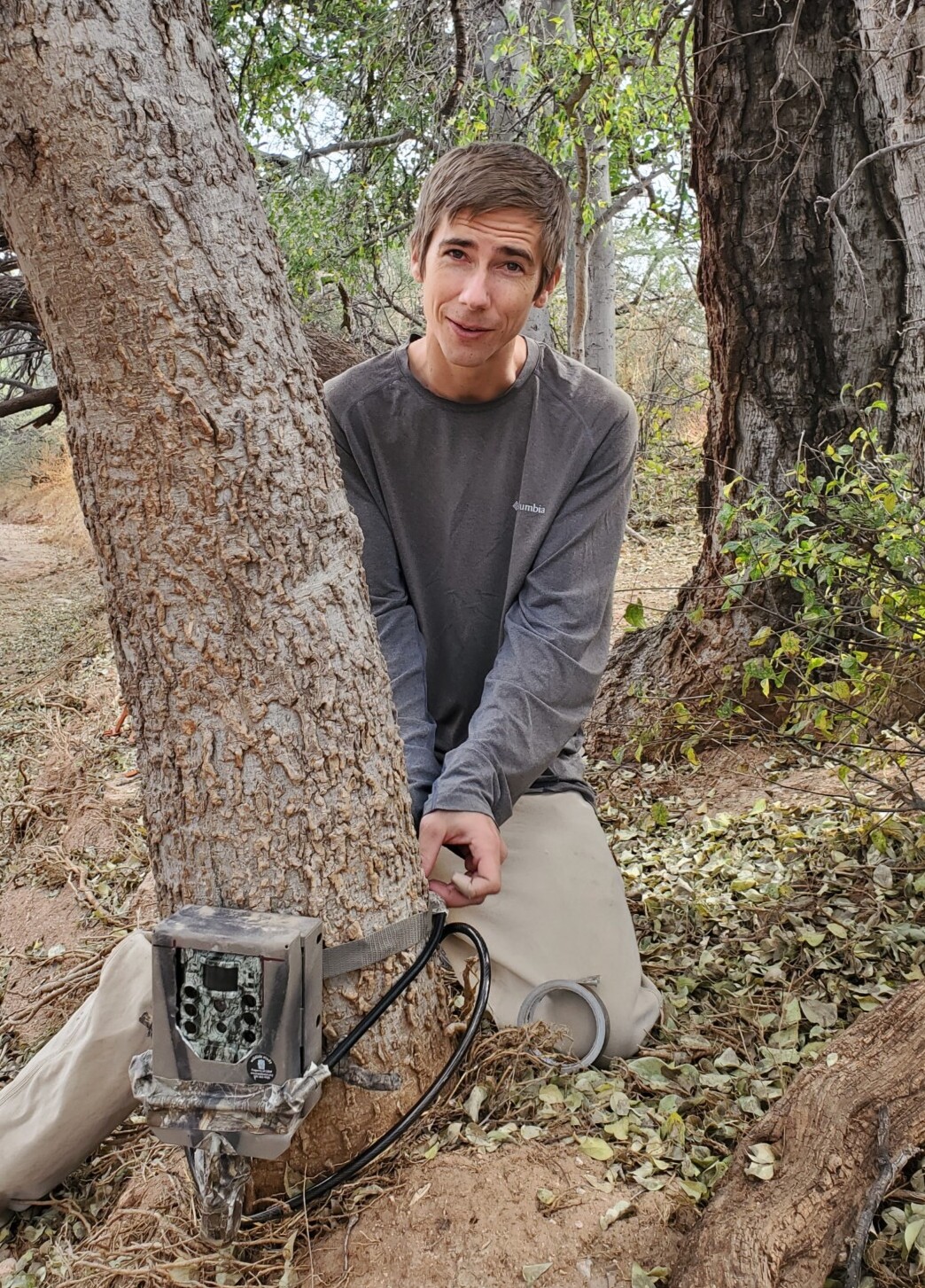
This technology is a fast-growing field, and models and brands differ in capability, including trigger speeds, delay settings, rapid fire or video recording ability, PIR sensor sensitivity settings, and detection distance and detection zone as it relates to the camera’s field of view. Some cameras have the ability to record temperature and moon phase as well as the date and time. With the right study design, a lot can be learned.
Wildlife of Sopori Creek
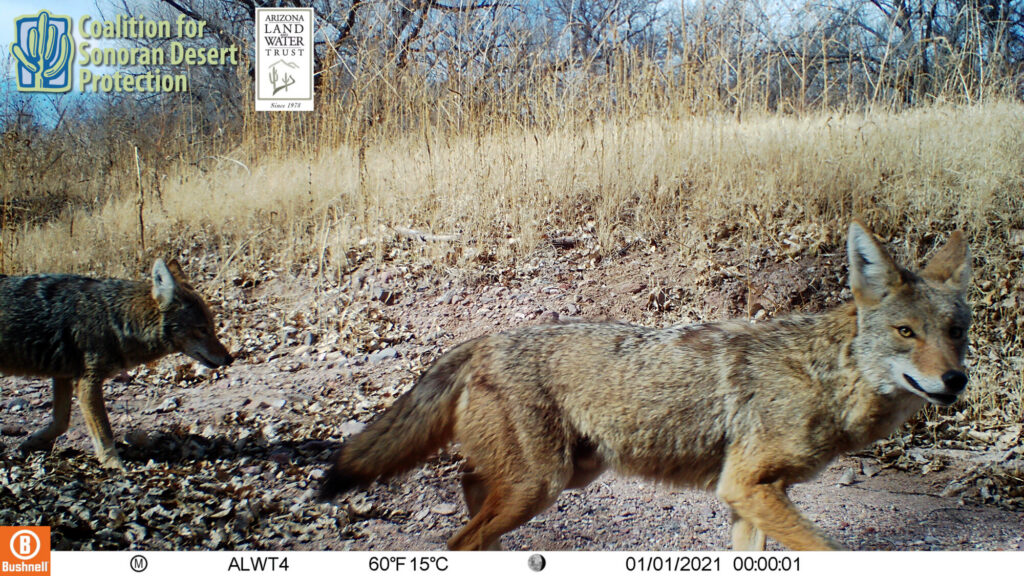
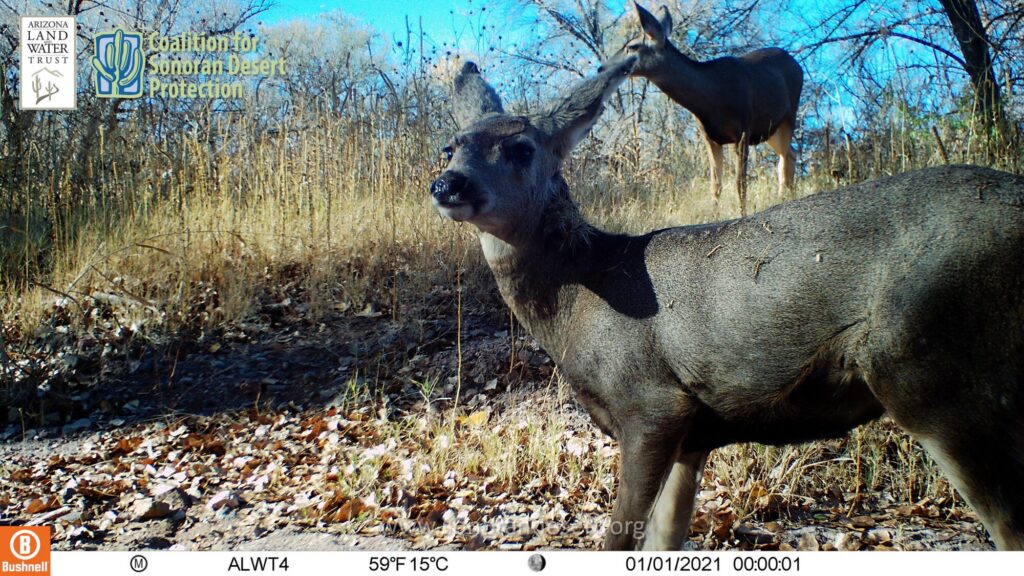
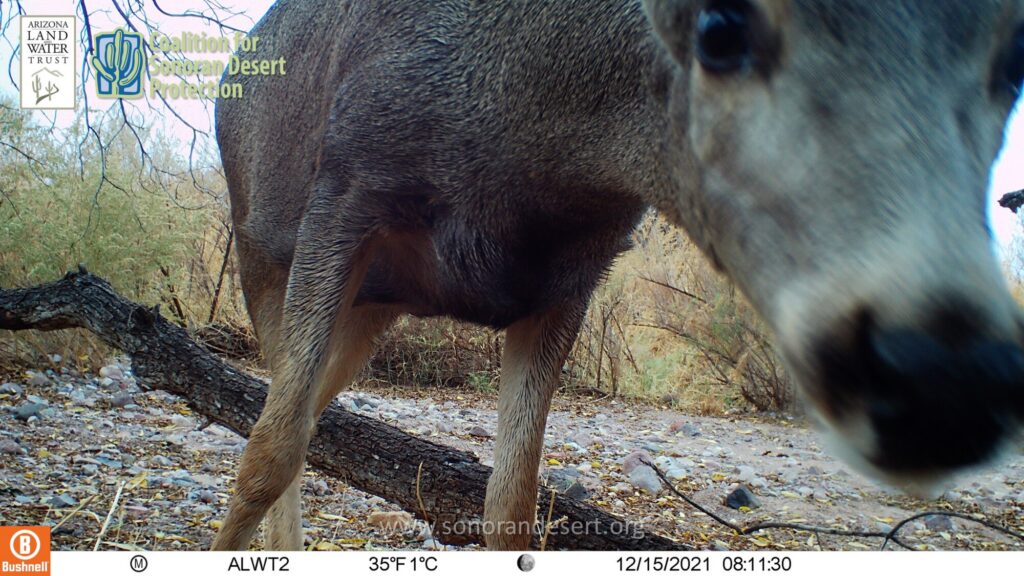


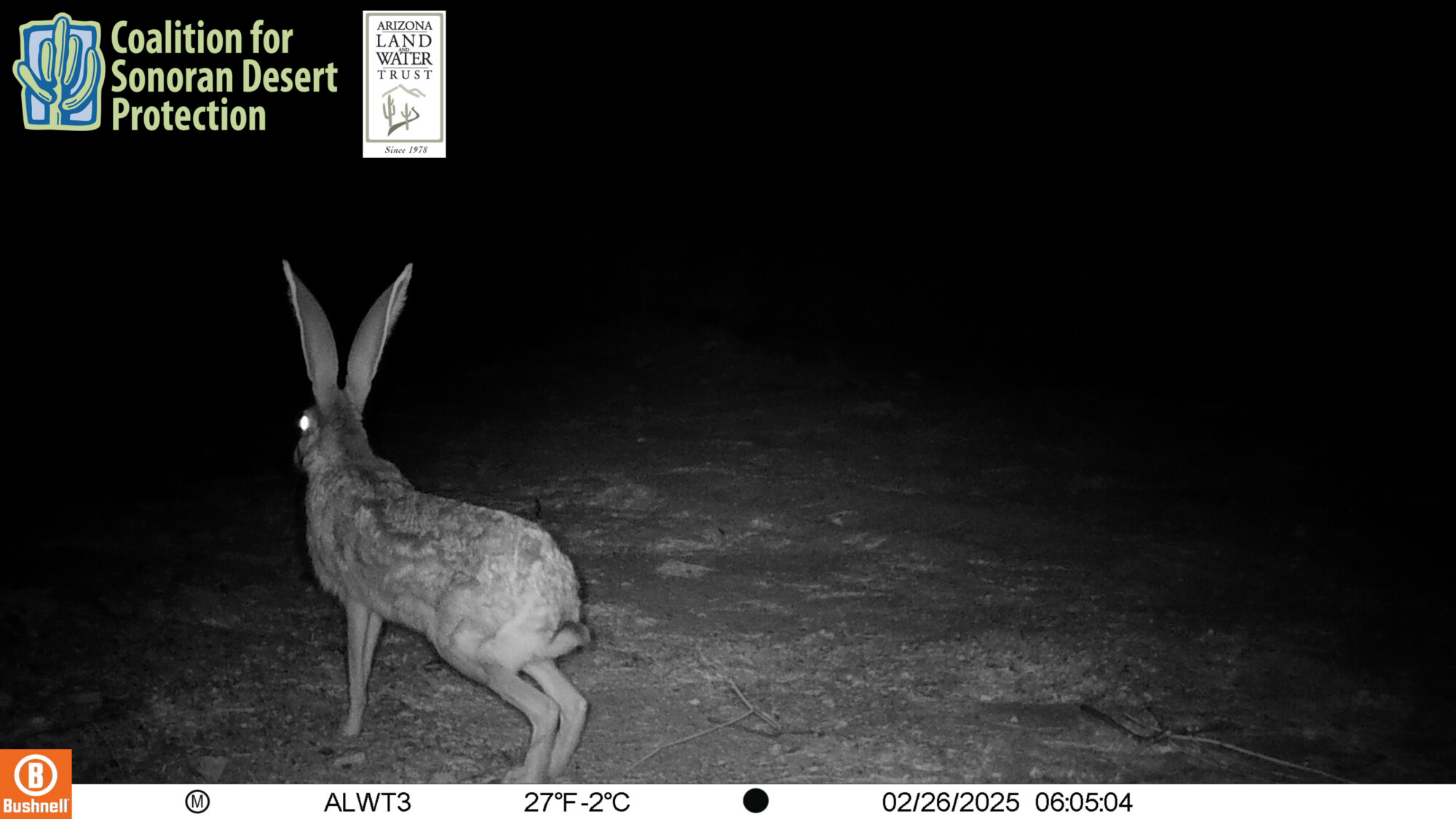
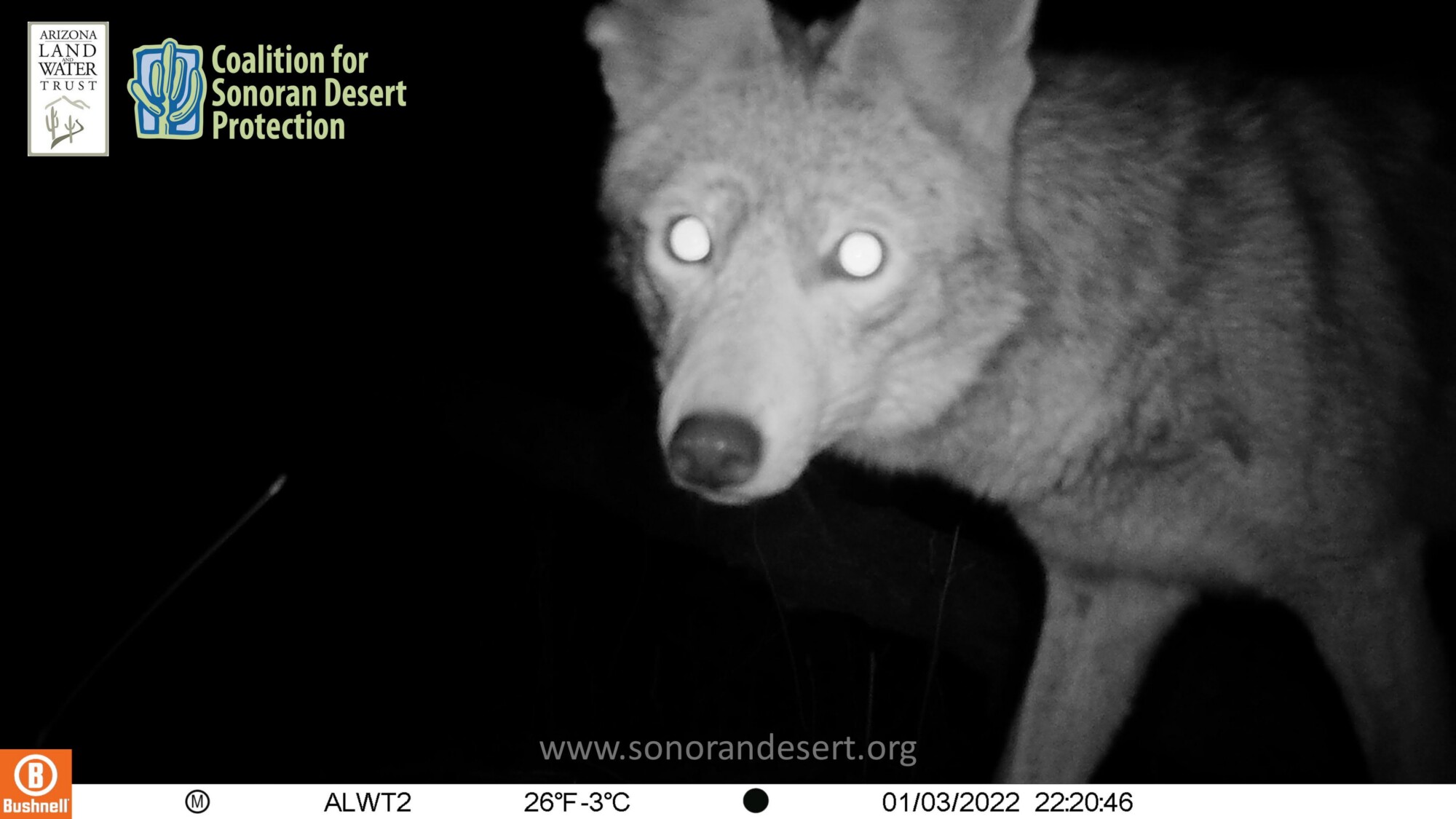
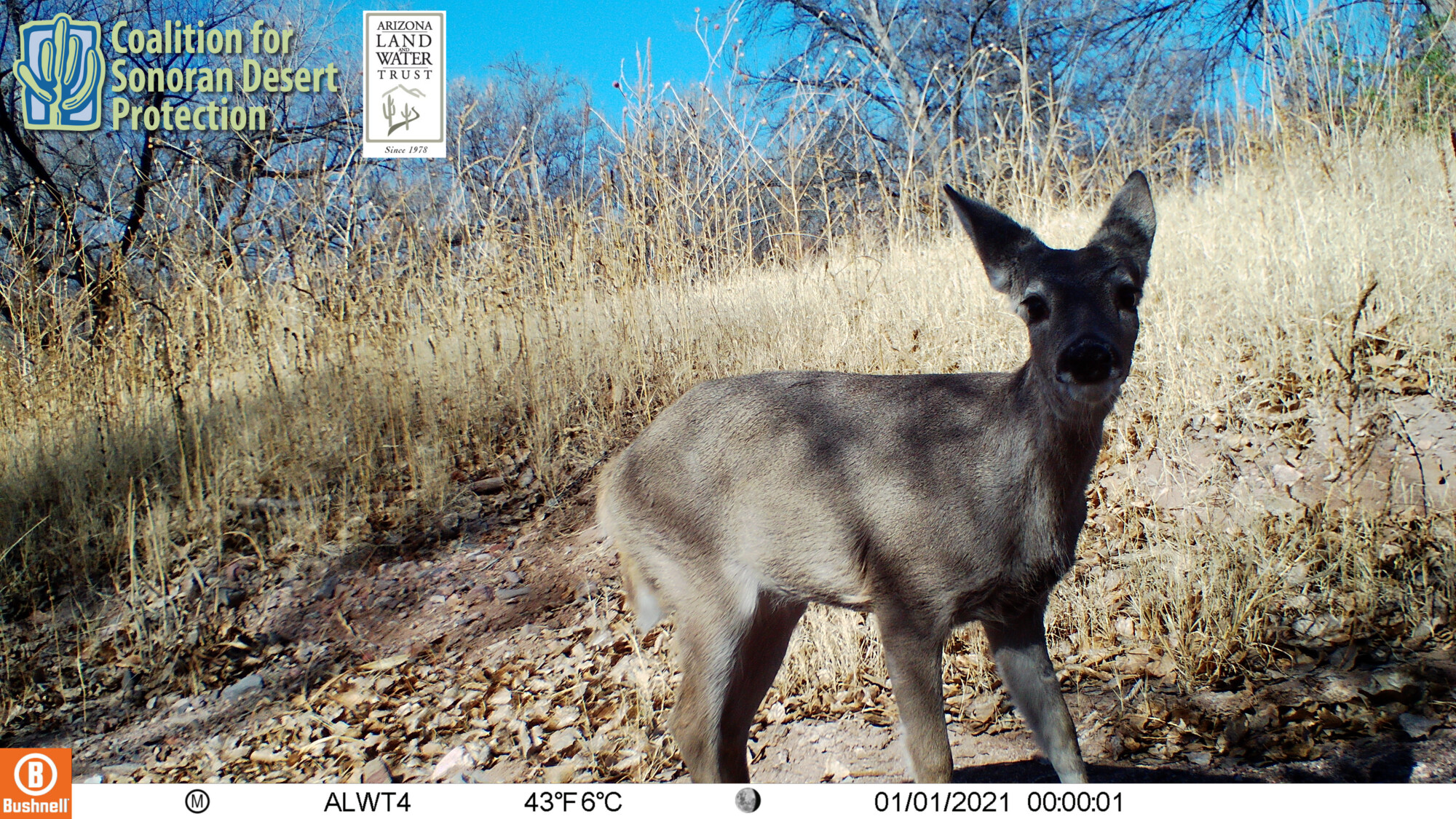
Between 2021 and 2025, CSDP cameras monitored nine different locations in Sopori Creek and Farm and collected 7,806 images of wildlife (totaling 19,484 individual animal detections) of over 26 mammal species in addition to several species of birds and reptiles. The most abundantly photographed animals were as I expected and hoped: whitetail deer, mule deer, javelina, jackrabbit and bobcats.
While we didn’t document some of the more infrequent treasures of Sopori (like jaguar and ocelot), the colorful array of critters we did capture paints a clear picture of why Sopori Creek is so valuable.
Of particular note was the presence of white-nose coati, three out of the four local species of skunks, gray fox, raccoons, ringtail, and badger. These species are mid-sized omnivores, also called mesocarnivores, whose presence indicates a healthy and balanced ecosystem. Nearly 26% of observations were in this mesocarnivore category.

Mesocarnivores are a critical thread in the tapestry of desert ecology, because they control insect and small rodent populations (and conversely, show that there is enough food thriving to support them). They also aerate the soil, act as nature’s clean-up crew by eating carrion, and provide food for larger carnivores, the pinnacle of any functioning habitat, like mountain lions and jaguars.
A diverse number of mesocarnivores species, and in consistently abundant numbers, is a green flag for conservation and land management practices, and healthy riparian habitats.
2,500 acres, now preserved
Armed with this information and some new, charismatic animal photos, AZLWT continued their work behind the scenes to promote the sale and permanent protection of the Sopori Creek area. They successfully raised $8 million to protect 2,500 acres of Sopori Creek and Farm.
Now protected, this location will provide farmers and ranchers a place where key issues, such as climate change, water shortages and land succession can be explored. It will be a nationally recognized center of excellence in sustainable land use practices as well as a stronghold for wildlife diversity.
Sopori Creek and Farm, when combined with the 6,650 acres of Sopori Ranch that Pima County and the Trust protected in 2009 and 2018, completes a linkage to the Santa Cruz River and east to the Santa Rita Mountains.
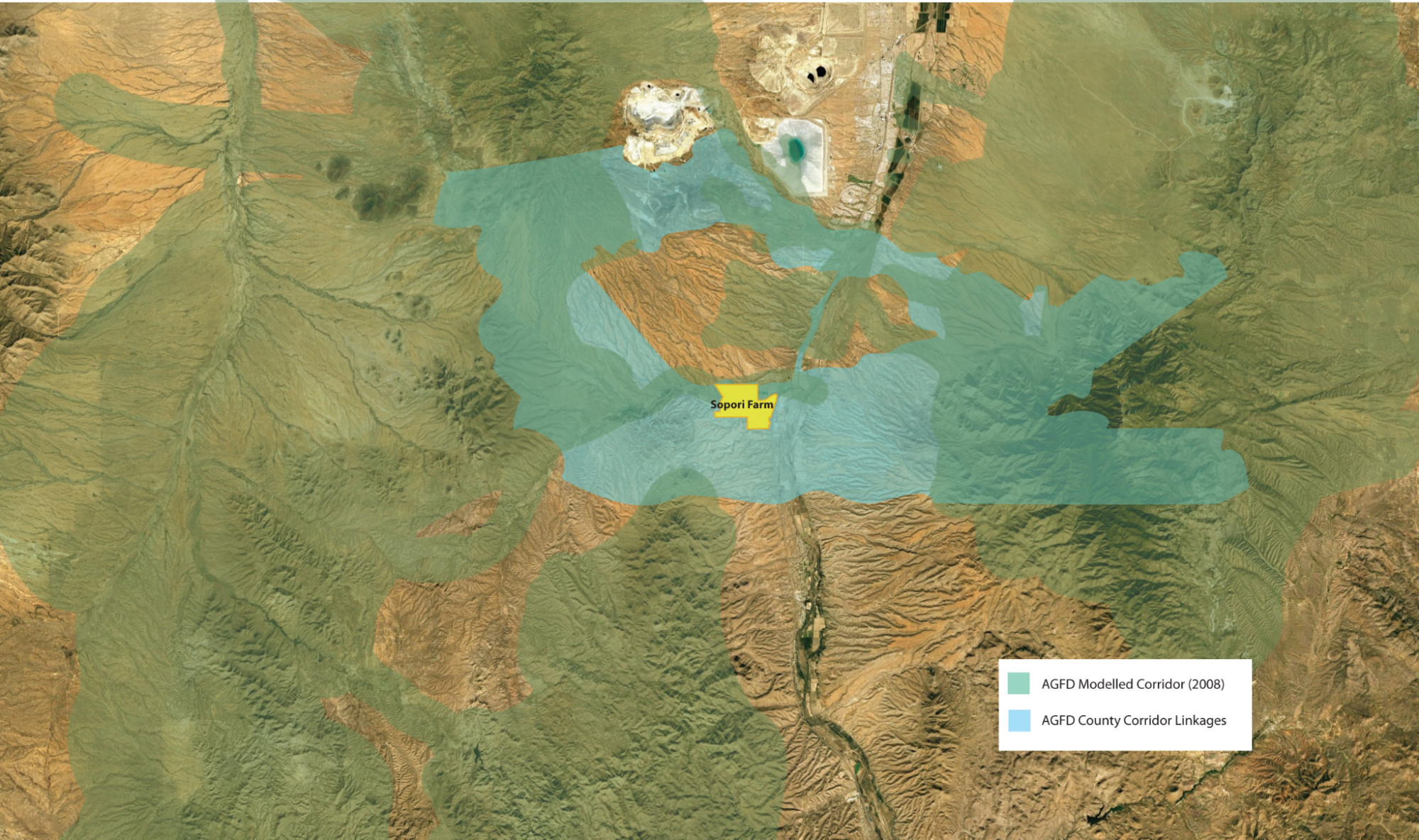
The study area (yellow), near Amado, Arizona and south of Tucson, Arizona, and where it lies within the larger wildlife linkage (blue) connecting the Santa Rita Mountains, the Cerro Colorado, and the Atascosa Mountains, as well as the Santa Cruz River. Map by Arizona Land and Water Trust.
This work continues
Protection of this property expands upon other AZLWT projects currently underway, including expansion of the Desert Rivers Program to the Santa Cruz River and promoting the use of short-term water lease agreements to address the needs of both local agricultural producers and rivers systems.
Sometimes, we need hard data – such as the presence of legally threatened and endangered species, an area’s species diversity, habitat modeling, and other analysis, to inform how best to conserve wildlife, and where.
In this case the animals simply spoke for themselves. Thankfully, people listened.
Although this wildlife monitoring project finished in 2025, CSDP continues to advocate for improved connectivity within this linkage. Existing culverts are used by wildlife, but they require maintenance and retrofits to better meet local wildlife needs. We continue to collaborate with AZLWT as a valued partner in this work!